24 inch Balance Bike Ages (9-13+)
The Ideal Convertible Balance Bike for Older Kids Aged 9–13+
Help your child build confidence and coordination with a 24 inch balance bike with attachable pedals designed specifically for older kids aged 9–13+ years. Featuring lightweight frames, kid-specific geometry, and adjustable components, these bikes make learning to ride easier, more comfortable, and more enjoyable. By mastering balance first, older riders can transition to a pedal bike naturally—without the need for training wheels.
✔ Fast Shipping Australia-wide • ✔ 30-Day Love Your Ride Guarantee • ✔ 5-Year Bike Warranty • ✔ Learn-to-Ride Specialists Since 2008
Loved by Hundreds of Happy Parents and Grandparents!
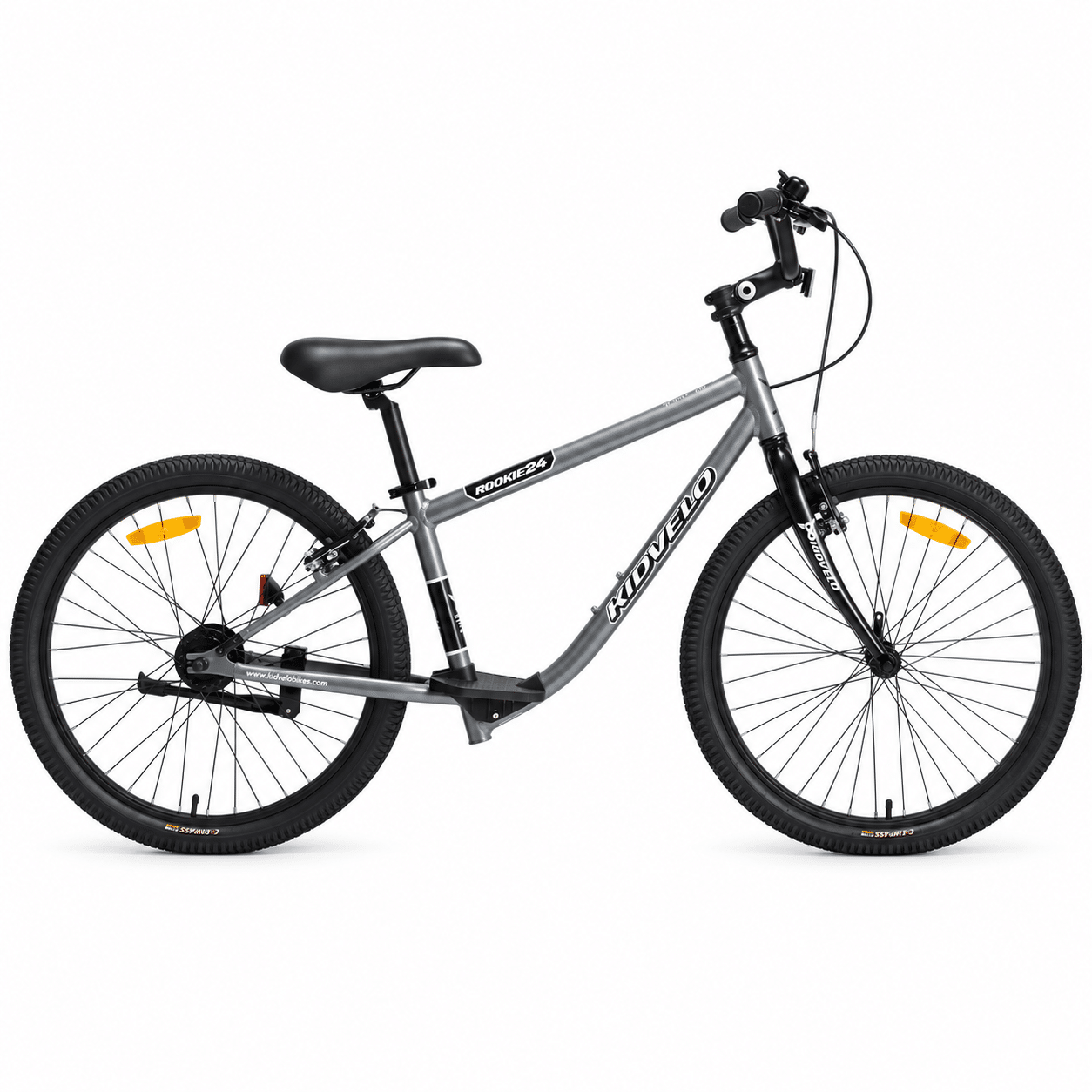 Rated 5.00 out of 5 based on 19 customer ratings(19)$749.00This product has multiple variants. The options may be chosen on the product page
Frequently Asked Questions of 24 inch Balance Bikes
A 24-inch balance bike is designed for older children aged approximately 9–13+ years who are learning to ride later, lack confidence on two wheels, or have additional needs. It's also ideal for teenagers and smaller adults who want to master balance before moving to a pedal bike. The best way to check fit is by measuring the rider's inseam rather than relying on age alone.
Balance is the most important cycling skill. A balance bike teaches riders to balance naturally before introducing pedalling, making the transition to a standard bicycle much faster and more enjoyable than learning with training wheels.
Every rider progresses differently, but many older children and beginners develop confident balance within a few sessions. Once they can glide comfortably with both feet off the ground, they're usually ready to move onto a pedal bike.
Yes. Many occupational therapists, physiotherapists and cycling instructors recommend balance bikes for children with autism, dyspraxia, developmental coordination challenges, anxiety or low confidence because they allow riders to learn at their own pace while keeping both feet close to the ground.
Choose a lightweight frame, pneumatic (air-filled) tyres, adjustable saddle and handlebars, a responsive hand brake, comfortable grips and durable components. A properly fitted bike is easier to control and more enjoyable to ride.
Once your child can glide confidently for extended distances, steer accurately, brake safely and feels ready to pedal, they're ready to transition to a standard bike without stabilisers.
Looking For Adventure and Insider Tips?
Here you’ll find tons of ideas and inspiration to make bike riding or skating with your child, even more fun!
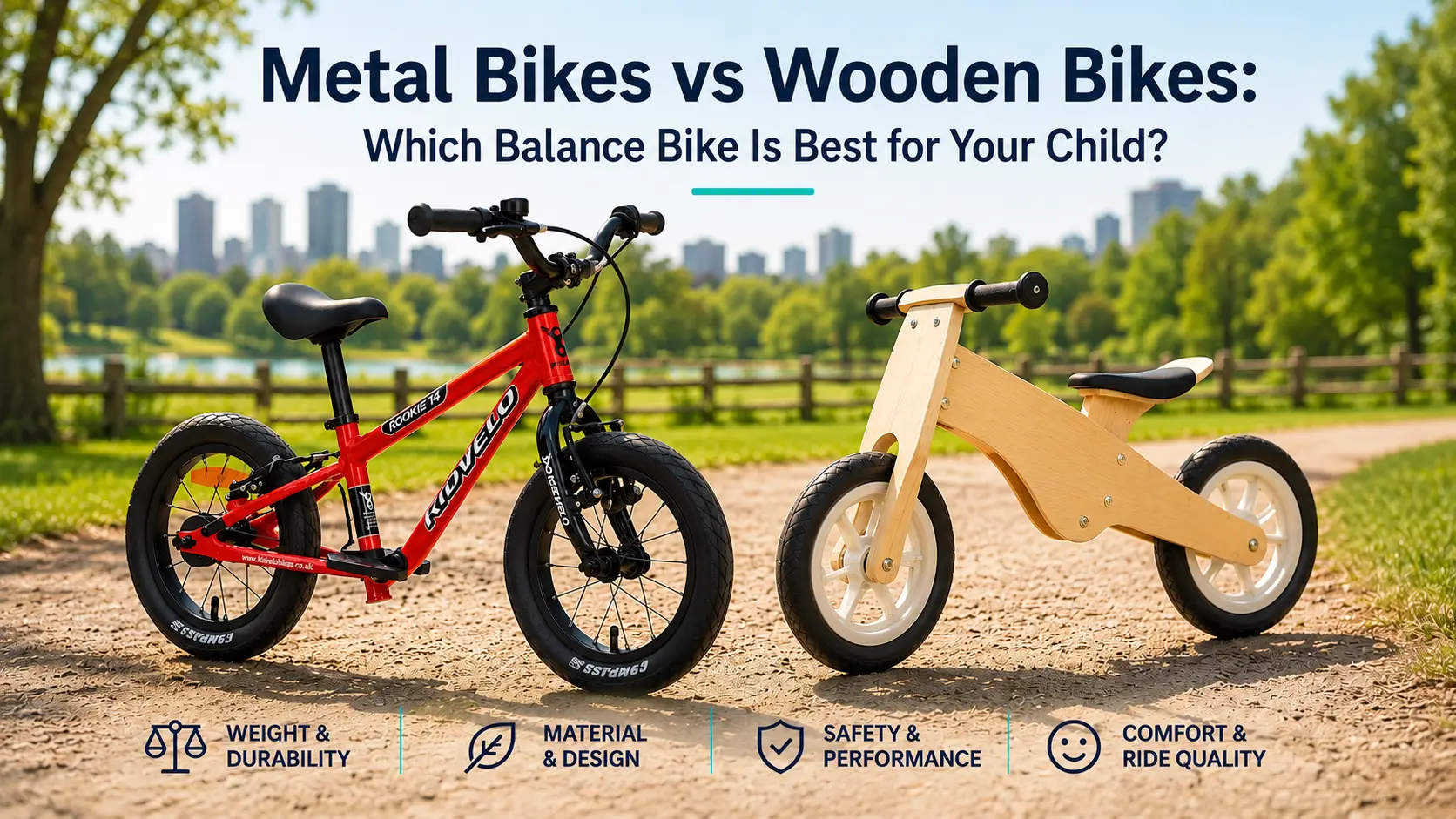
Why Choose Our Quality Products For Your Child?
The Complete Guide to the 24-Inch Balance Bike for Ages 9–13+ Years
The High-Performance Solution for Older Beginners, Tweens, Teenagers, and Beyond
The Balance Bike That Nobody Told You Existed — But Every Family Needs to Know About
If you’re searching for the best balance bike for a 10-year-old, a bike for an older child who hasn’t learned to ride, the best way to teach a teenager to cycle, a balance bike for an adult beginner, or an adaptive cycling solution for an older child with additional needs — you’ve found exactly what you’ve been looking for.The 24-inch balance bike is one of the most important and least talked-about products in children’s cycling. While the balance bike revolution has been widely celebrated for toddlers and young children, the reality is that millions of older children, teenagers, and adults around the world haven’t yet learned to ride a bike — and until recently, the options available to them were deeply inadequate.Traditional advice for older non-riders pointed toward pedal bikes with stabilisers — a solution that’s frustrating, slow, and ineffective at any age, let alone for a self-conscious 11-year-old. The 24-inch balance bike changes everything for this group, providing the same powerful, proven learning framework that transformed toddler cycling — scaled up, properly specified, and designed to work brilliantly for older, bigger, more demanding riders.At Kidvelo, we’re passionate about making cycling accessible and achievable for every rider at every age and every stage. The 24-inch balance bike is one of our most important products precisely because it reaches the children — and adults — who need it most.Who Is the 24-Inch Balance Bike For? Understanding Your Rider
The 24-inch balance bike serves a broader and more diverse range of riders than any other size in the balance bike range. Understanding which category your child or family member falls into helps frame the right expectations and approach.Older Children Who Haven’t Learned to Ride (Ages 9–13)
This is perhaps the largest and most underserved group. Despite the prevalence of cycling culture and the availability of bikes for all ages, a significant proportion of children reach secondary school age without having learned to ride.The reasons are varied and entirely understandable:- Limited access to bikes or safe riding spaces during key learning years
- Medical conditions, additional needs, or physical differences that made earlier learning difficult
- Anxiety or negative early experiences with bikes
- Simply never having had the opportunity or right support
Teenagers Wanting to Learn (Ages 13+)
Teenagers who haven’t learned to ride often face additional barriers of self-consciousness and peer awareness. The 24-inch balance bike addresses this directly — it looks like a proper, full-sized bike, it performs like one, and it produces results fast enough that the learning phase is genuinely brief.Most teenage beginners on a properly sized balance bike are gliding confidently within their first or second session and ready to transition to a full-sized pedal bike within a few weeks. The learning window is short — and the result is a skill for life.Adults Learning to Ride
Adult non-cyclists represent a genuinely significant demographic — estimates suggest that approximately 1 in 5 adults in the Australia & the UK cannot ride a bike. For adults, the 24-inch balance bike provides:- A completely non-intimidating entry point to cycling
- The ability to always have feet on the ground — eliminating the fear of uncontrolled falling that stops many adults from attempting to learn on a pedal bike
- Fast, visible progress that builds motivation and commitment
- A genuine pathway to cycling independence, health benefits, and the joy of riding
Children and Adults with Additional Needs
As discussed in our FAQs, the 24-inch balance bike has significant applications in adaptive and therapeutic cycling. For older children and adults with a range of physical, neurological, or developmental differences, it provides an accessible, achievable, and evidence-backed pathway to cycling that may not have seemed possible through conventional approaches.The Science of Learning to Ride as an Older Beginner
Why Adults and Older Children Learn Differently — But Just as Effectively
One of the most persistent myths in cycling is that learning to ride is fundamentally a childhood skill — that if you haven’t learned by a certain age, you’ve somehow missed your window. This is completely untrue, and the neuroscience supports this clearly.Motor learning — including cycling — remains highly accessible throughout life. The brain’s ability to form new motor patterns, called motor plasticity, doesn’t disappear in adulthood. It changes in character — adults tend to be more deliberate and analytical in their learning — but it remains entirely capable of acquiring complex new skills including cycling.What changes with age is the learning approach rather than the capacity:Children tend to learn through play, repetition, and unconscious trial and error. They fall, get up, and try again without significant psychological friction.Older children and adults bring greater cognitive ability, better body awareness, and stronger motivation to goal-directed learning — but may also bring more anxiety about falling and greater self-consciousness about being seen as a beginner.The balance bike approach is uniquely well-suited to older learners precisely because it:- Eliminates the primary fear (uncontrolled falling) by keeping feet always within reach of the ground
- Produces fast, visible, measurable progress — powerful motivation for older learners who are goal-oriented
- Builds genuine, transferable balance skills rather than creating dependency on support systems
- Allows completely self-paced learning with no external pressure
The Stages of Balance Bike Learning for Older Riders
Understanding the typical progression helps set realistic expectations and allows learners to track their own progress:Stage 1 — Familiarisation (Days 1–3) Getting comfortable sitting on the bike, steering at walking pace, and understanding how the bike responds to body weight shifts. Many older learners move through this stage very quickly.Stage 2 — Scooting and Momentum (Week 1) Using both feet alternately to build speed and momentum. Beginning to experience the feeling of the bike tracking straight. First awareness of natural balance.Stage 3 — Early Gliding (Week 1–2) First foot lifts — brief moments of genuine balance on two wheels. This is the breakthrough stage that motivates continued practice powerfully.Stage 4 — Extended Gliding (Week 2–4) Consistently gliding for 5, 10, 15+ seconds. Developing steering control during gliding. Beginning to tackle gentle slopes and varied surfaces.Stage 5 — Confident Riding and Transition Readiness (Week 3–8) Extended gliding, confident cornering, effective braking, comfortable on varied terrain. At this stage, the transition to a pedal bike becomes the natural next step.The timeline above is typical for regular practice of 20–30 minutes several times per week. More frequent practice accelerates progression; less frequent practice extends it — but progress always continues.Technical Deep Dive — What Makes a Quality 24-Inch Balance Bike
At this size and for this rider demographic, specification quality matters more than at any other point in the balance bike range. Here is a comprehensive breakdown of every key technical consideration.Frame Design and Engineering
The frame is the foundation of the entire riding experience. For a 24-inch balance bike serving riders from older children to adults, frame design must balance several competing demands:Strength — Must accommodate a wide range of rider weights, including adults, without flex or structural compromise.Weight — Must remain light enough for comfortable handling, manoeuvring, and transportation. Heavy frames fatigue riders and reduce enjoyment.Geometry — The frame geometry determines riding posture, which directly affects comfort, control, and the efficiency of balance skill development.Material options and their real-world implications:Aircraft-Grade Aluminium Alloy ✅ (Recommended) The premium choice for 24-inch balance bikes. Provides an exceptional strength-to-weight ratio, complete rust resistance, and a refined riding feel. Look for 6061 aluminium alloy — the same specification used in quality adult performance bikes.Chromoly Steel A quality steel alloy that’s stronger and lighter than standard steel. Can produce a very good balance bike with a slightly more compliant, comfortable ride feel. Heavier than aluminium but acceptably so if weight is controlled.Standard Steel Avoid for this application. Significantly heavier than the alternatives, prone to rust, and inappropriate for a product targeting adult-weight riders.Frame geometry considerations:- Low step-over height — makes mounting and dismounting easy for all riders, particularly important for those with limited mobility or confidence
- Relaxed head tube angle — provides more stable, predictable steering for learners
- Appropriate bottom bracket height — ensures correct seated posture and comfortable leg extension
Wheel and Tyre Specification — Performance Engineering for Larger Riders
At 24 inches and with riders up to adult weight, wheel and tyre specification requires serious consideration.Wheel Construction Look for double-walled aluminium alloy rims — these are significantly stronger than single-wall rims and far better suited to the demands of heavier riders. Single-wall rims may deform under repeated impact loads from adult-weight riders, leading to wheel distortion and reduced performance.Spoke count and gauge matters too — more spokes (36+) and appropriate gauge wire provides greater wheel strength and longevity for heavier riders.Tyre Width and Compound At 24 inches, tyre width becomes an important performance variable:- 1.75-inch tyres — lighter and lower rolling resistance; suitable for primarily road and path use
- 2.0–2.25-inch tyres ✅ — the sweet spot for most riders; good grip, comfort, and versatility
- 2.4-inch+ tyres — maximum grip and cushioning; ideal for mixed terrain and off-road use; higher rolling resistance
Braking System — Critical Safety Engineering at This Scale
For a 24-inch balance bike used by older children and adults travelling at meaningful speeds, braking performance is a genuine safety-critical specification.Brake Types and Their Implications:Linear Pull (V-Brake) ✅ The most common and generally most appropriate choice for 24-inch balance bikes. Provides strong, progressive stopping power, is easy to adjust and maintain, and works with standard brake levers. Look for quality alloy V-brake arms rather than cheap steel alternatives.Disc Brakes (Mechanical) Found on some premium 24-inch balance bikes. Provides consistent stopping power regardless of rim condition or wet weather. More complex to adjust and maintain but offers superior performance in challenging conditions. Appropriate for more advanced or performance-oriented applications.Brake Lever Specification At this size, adult-specification brake levers are appropriate — they’re sized for larger hands and provide the leverage required for effective braking with reasonable hand force. Look for adjustable lever reach to accommodate different hand sizes within the family.Brake Pad Material Quality compound brake pads provide better stopping performance and longer life than basic rubber pads. Look for pads designed for aluminium rims (if applicable) — steel-rim pads used on alloy rims can damage the braking surface.Drivetrain — Bearings and Rolling Efficiency
A balance bike has no drivetrain in the conventional sense — but the quality of bearing systems throughout the bike has a direct and noticeable impact on rolling efficiency and riding feel.Headset Bearings (steering) Quality sealed cartridge bearings in the headset provide smooth, precise steering that doesn’t degrade over time or require frequent adjustment. Cheaper loose-ball headsets become rough and notchy with use, making steering less precise.Wheel Hub Bearings Sealed bearing hubs are strongly recommended at this size. They roll more smoothly, require minimal maintenance, and are far more resistant to water and contaminant ingress than loose-ball alternatives. For heavier riders making longer journeys, the difference in rolling efficiency is genuinely noticeable.Saddle and Seat post — Comfort for Longer Rides
As riders get older and rides get longer, saddle comfort becomes meaningfully important — particularly during extended balance bike sessions.Look for:- Age and size-appropriate saddle width — a saddle sized for a toddler will be uncomfortable for a teenager or adult
- Quality foam or gel padding — provides comfort without excessive softness that reduces control
- Durable, weather-resistant cover material
- Quality seat post with secure clamp — should hold firmly at any height setting without slipping under load
- Sufficient seat post length — to accommodate the full range of riders in the 9–13+ category
The 24-Inch Balance Bike in Adaptive and Therapeutic Cycling
This deserves dedicated discussion because it represents one of the most important and impactful applications of the 24-inch balance bike.The Evidence Base for Balance Bikes in Therapeutic Settings
Research into adaptive cycling has consistently demonstrated that balance bikes offer significant advantages over conventional adapted bikes for many individuals with physical, neurological, and developmental differences:Proprioceptive and Vestibular Stimulation The dynamic balance demands of riding engage and develop the vestibular system (balance and spatial orientation) and improve proprioceptive awareness (body position sense). For individuals with conditions affecting these systems, balance biking provides targeted, enjoyable, intrinsically motivating therapeutic exercise.Bilateral Coordination The alternating push-and-glide action of balance biking develops bilateral coordination — the ability to use both sides of the body in coordinated, differentiated ways. This is a key developmental target for many individuals with neurological differences.Core Strength and Postural Control Maintaining an upright position on a balance bike engages the deep core stabilising muscles continuously. For individuals with low core tone or postural challenges, regular balance biking builds genuine functional strength.Psychological and Emotional Benefits Perhaps most importantly, cycling independence — even partial, supported independence — has profound psychological benefits for individuals with additional needs. The sense of capability, freedom, and achievement that comes with successfully riding a bike is transformative for many individuals and their families.Working with Therapists and Specialists
If you’re considering a 24-inch balance bike for a child or adult with additional needs, we strongly recommend:- Consulting your occupational therapist or physiotherapist before purchase — they can advise on suitability, any specific adaptations required, and appropriate goals
- Contacting specialist adaptive cycling organisations in your area — many offer assessment sessions, trial bikes, and expert coaching
- Speaking to our Kidvelo team — we have experience supporting families with additional needs and can help identify the most suitable product and configuration
Transitioning From the 24-Inch Balance Bike to a Full-Sized Pedal Bike
The Transition — What to Expect
For most riders, the transition from a 24-inch balance bike to a full-sized pedal bike without stabilisers is genuinely straightforward — often completing in a single session of 30–60 minutes.The reason is simple: pedalling is a relatively simple mechanical skill that sits on top of the foundational skill of balance. Once balance is genuinely mastered — as it is by the end of the balance bike journey — adding pedalling simply requires learning to coordinate the circular pushing motion and connect it to forward movement.The transition process:- Choose a quiet, flat area with good surface
- Remove the pedals from the target bike initially — this creates a temporary “balance bike” feel with the correct geometry
- Have the rider push and glide on the pedal-free bike until comfortable with its feel and size
- Refit the pedals and encourage the rider to scoot, then place feet on pedals mid-glide
- Within one to three sessions, most balance bike graduates are pedalling independently
Choosing the Right Pedal Bike for the Transition
For children aged 9–13 transitioning from a 24-inch balance bike, appropriate pedal bike sizes are typically:| Child Age/Height | Recommended Pedal Bike Size |
|---|---|
| 9–10 years / 130–140cm | 24-inch pedal bike |
| 11–12 years / 140–150cm | 26-inch pedal bike |
| 13+ years / 150cm+ | 26-inch or adult 700c |
Kidvelo 24-Inch Balance Bike — The Specification That Sets Us Apart
At Kidvelo, we’ve designed our 24-inch balance bike to meet the genuine demands of older children, teenagers, and adults — without compromise on the features that matter most.Every element of our 24-inch balance bike reflects our commitment to quality, performance, and rider experience:- 🚲 Lightweight aluminium alloy frame — strong, rust-free, and beautifully weighted for comfortable handling
- 🚲 Quality pneumatic tyres — superior grip, comfort, and performance across all surfaces
- 🚲 Dual hand brake system — reliable, progressive stopping power for confident riding at speed
- 🚲 Sealed bearing hubs — smooth, efficient rolling with minimal maintenance
- 🚲 Wide seat height range — accommodates the full spectrum of riders from older children to adults
- 🚲 Adjustable stem and handlebars — precise fit for optimal posture, comfort, and control
- 🚲 Age-appropriate saddle — comfortable for extended riding sessions
- 🚲 Maximum weight rating — engineered for adult use, not just children
- 🚲 Premium finish and detailing — looks as good as it rides