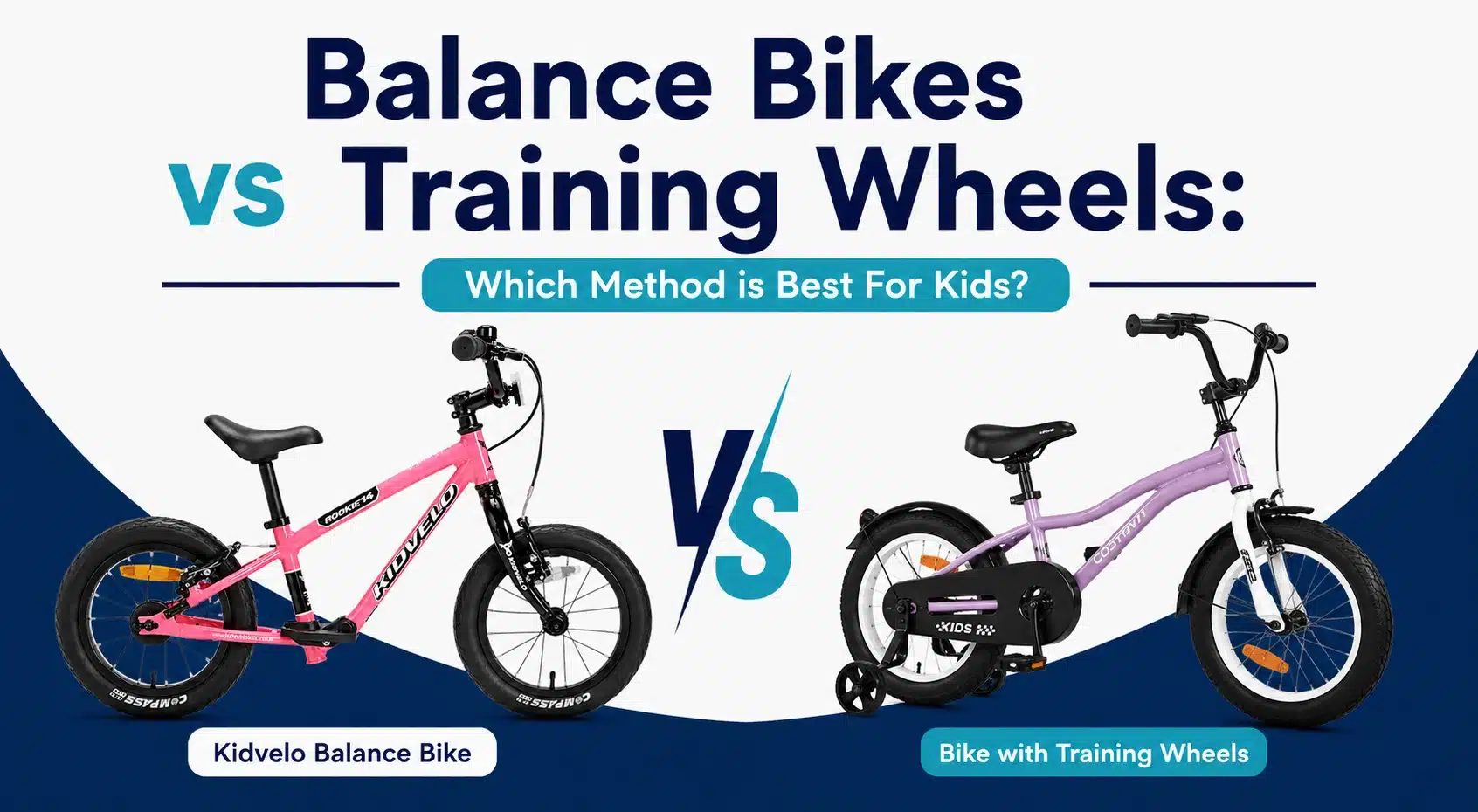
For generations, training wheels were the default way kids learned to ride. But over the last decade, balance bikes have completely changed how children learn to cycle — and the research backs it up.
More parents (and grandparents shopping for the perfect gift) are now choosing lightweight balance bikes because they build real confidence, coordination and balance naturally — often helping kids skip training wheels altogether.
At Kidvelo Bikes, we design lightweight balance bikes specifically to help toddlers and young children learn to ride safely and confidently. After helping thousands of families pick the right first bike, we’ve seen firsthand which method actually works.
So — balance bikes or training wheels? Let’s break it down.
Quick Comparison: Balance Bikes vs Training Wheels
| Balance Bikes | Training Wheels | |
|---|---|---|
| Skill taught first | Balance & steering | Pedalling |
| Learning curve | Natural, gradual | Sudden re-learning when wheels come off |
| Confidence building | High — feet stay near ground | Lower — false sense of stability |
| Transition to pedal bike | Fast (often days) | Slower, sometimes frustrating |
| Best age to start | 18 months – 5 years | 3–6 years |
| Falls & fear factor | Minimal | Can increase once wheels are removed |
What Is a Balance Bike?
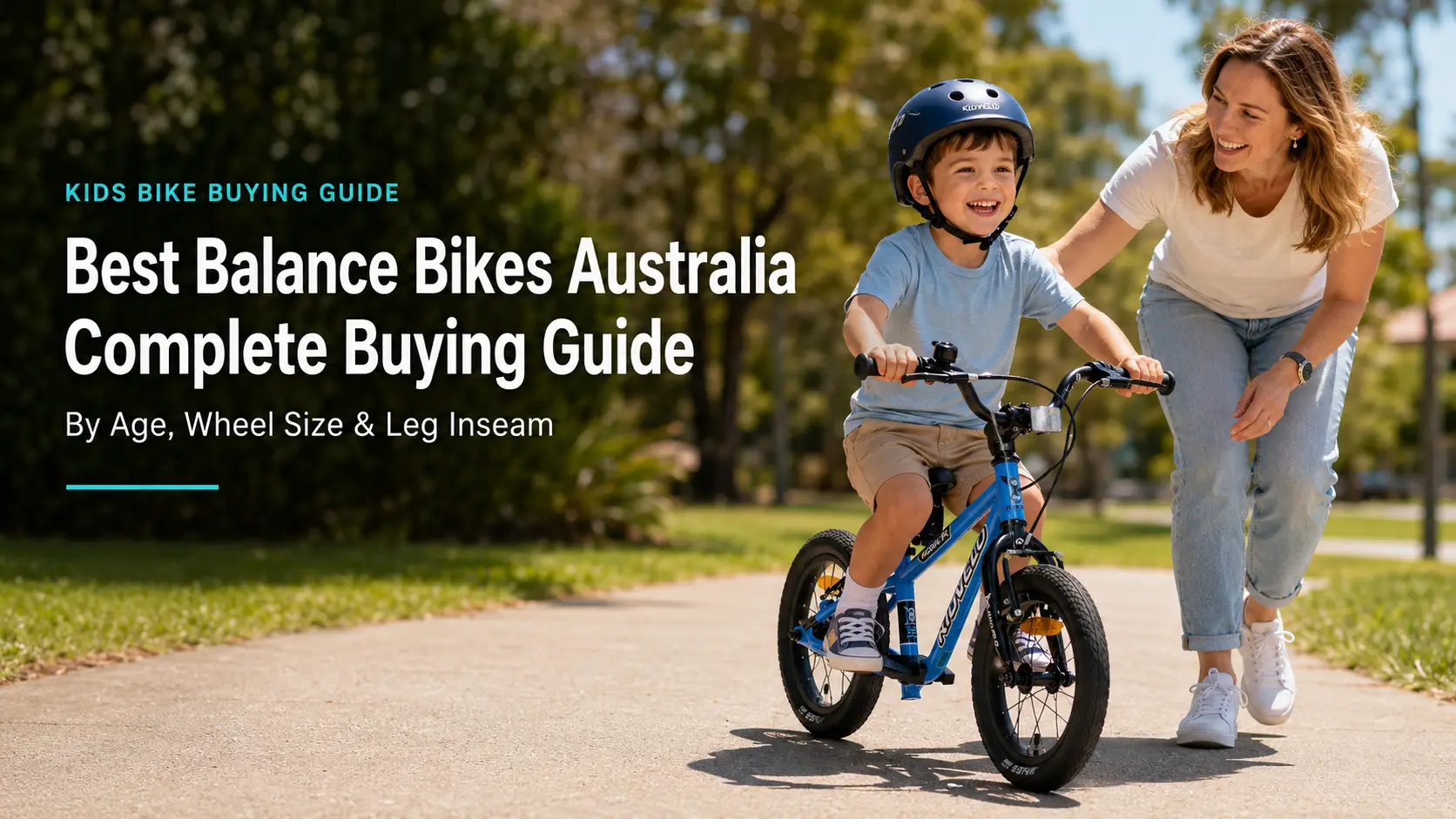
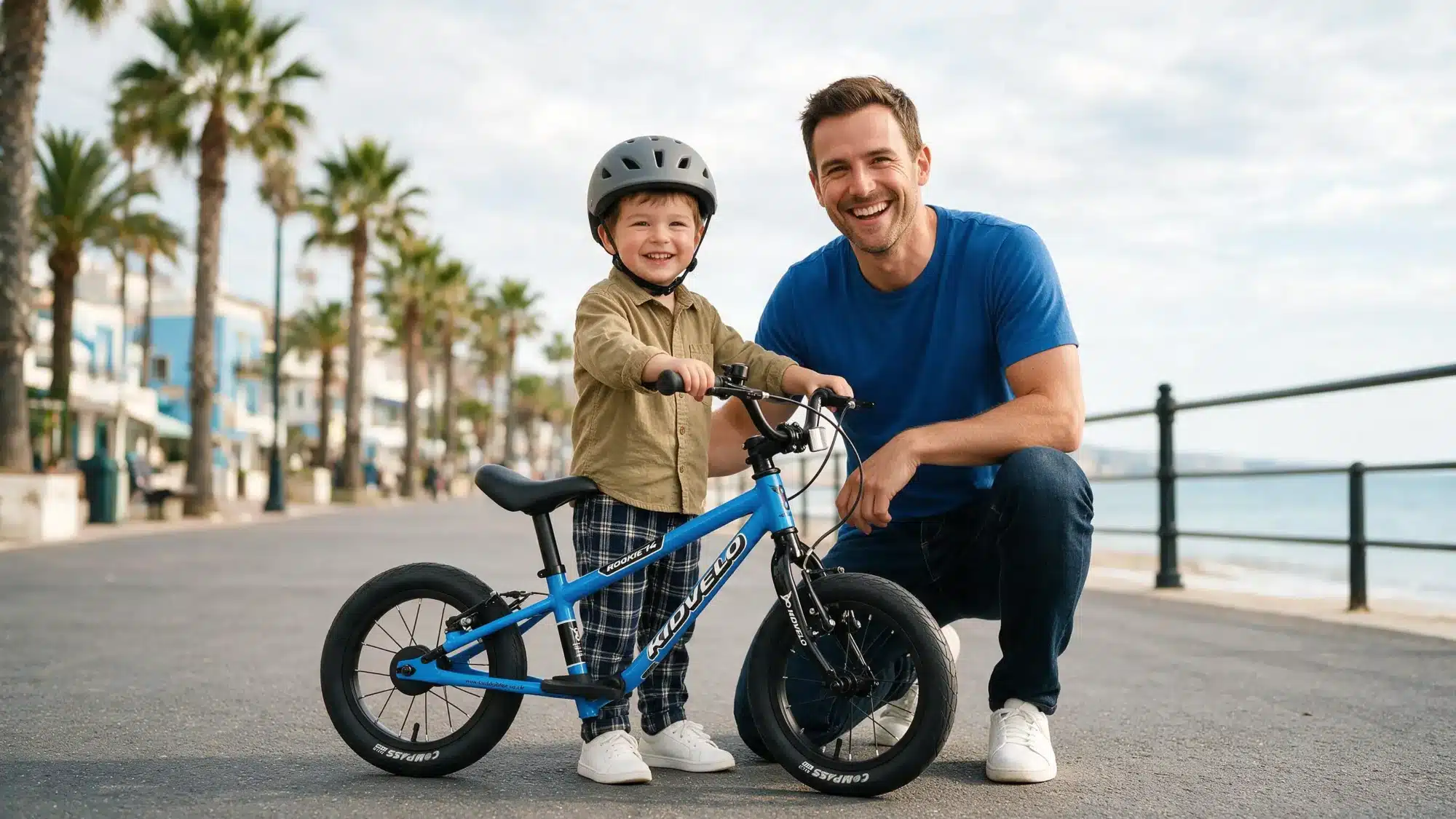
A balance bike is a pedal-free bike that teaches kids the most important cycling skill first: balance.
Instead of pedals or stabilisers, children push off with their feet while learning to balance, steer and control the bike naturally. Over time, they glide with feet lifted — building the exact skills needed to ride a pedal bike later.
Balance bikes are designed for kids roughly 18 months to 5 years old and are now widely recommended by paediatric physiotherapists and cycling coaches alike.
Why Parents & Grandparents Love Balance Bikes
- Build confidence quickly
- Reduce fear of falling
- Teach real balance, not artificial stability
- Improve coordination and motor skills
- Make the jump to pedal bikes far easier
Most importantly? Kids genuinely love riding them.
What Are Training Wheels?
Training wheels (or stabilisers) are small side wheels bolted onto a standard pedal bike to keep it upright while a child learns to pedal.
The theory: kids learn pedalling first, then remove the wheels and learn balance separately.
While training wheels helped generations of kids get moving, most modern riding experts now agree they can slow down the learning process — because kids learn to lean on the stabilisers instead of developing true balance and control.
The Core Difference: Balance-First vs Pedal-First Learning
Balance Bikes Teach Balance First
- Balance
- Steering
- Coordination
- Braking
- Confidence
Once a child masters balance, pedalling is the easy part.
Training Wheels Teach Pedalling First
- Pedalling
- Basic steering
But when the stabilisers come off, kids often need to learn balance from scratch — which can create fear and frustration at exactly the wrong moment.
At Kidvelo Bikes, we regularly hear from parents whose kids move from a balance bike straight onto a pedal bike in a single afternoon — because balance is already mastered.
7 Reasons More Families Are Choosing Balance Bikes
1. Kids Learn to Ride Faster
Many balance bike graduates skip training wheels entirely — some ride confidently on a pedal bike within minutes of trying one, because the only new skill is pedalling.
2. They Build Confidence Naturally
Feet stay close to the ground at all times, so kids feel secure and in control. Confident kids ride more — and the more they ride, the faster they progress.
3. Lightweight Design Makes All the Difference
One of the biggest mistakes parents make is buying a bike that’s too heavy. A heavy bike is hard to steer, lift and control — which makes learning frustrating fast.
A properly weighted, lightweight balance bike helps kids:
- Manoeuvre easily
- Build confidence faster
- Improve coordination
- Ride longer without tiring
4. Better Coordination & Motor Skill Development
Kids naturally develop:
- Steering control
- Body positioning
- Balance correction
- Braking awareness
- Spatial awareness
5. A Safer Learning Experience
Because kids can plant their feet instantly, balance bikes feel more secure for beginners. Training wheels, by contrast, can wobble unexpectedly on uneven ground or tight corners.
6. Kids Simply Have More Fun
The best bike is the one your child wants to ride. Balance bikes feel exciting and natural — kids can glide, explore parks and gain independence early.
7. A Smoother Transition to Pedal Bikes
Kids who’ve mastered balance typically move to pedal bikes with:
- No training wheels needed
- Fewer falls
- Immediate confidence
Do Training Wheels Have Any Benefits?
For very cautious riders, stabilisers can offer initial reassurance while learning the pedalling motion. Some parents also simply prefer the familiarity of training wheels.
However, most experts agree they create an extra learning stage later, since balance still has to be learned independently once the wheels come off.
Our recommendation: start with a balance bike first — it builds real riding skills earlier and more naturally.
What Age Should Kids Start on a Balance Bike?
Most children can start from around 18 months, depending on height and coordination.
| Age Range | What to Expect |
|---|---|
| 18 months – 2 years | Introductory balance bikes, focus on walking & confidence |
| 2 – 4 years | Ideal age for balancing & gliding, rapid skill development |
| 4 – 6 years | Transition to lightweight pedal bikes, many skip training wheels entirely |
💡 Tip: Choosing the correct size matters far more than age — always check seat height and standover clearance.
How to Choose the Best Balance Bike
1. Prioritise a Lightweight Frame
Weight is everything for small riders. A lighter bike is easier to balance, steer, lift and control.
2. Get the Seat Height Right
Your child should be able to sit comfortably with both feet flat on the ground. Proper fit = instant confidence.
3. Air Tyres vs Foam Tyres
Air Tyres
- Smoother ride
- Better grip
- Great for parks & paths
Foam Tyres
- Maintenance-free
- Lighter
- Great for casual riders
4. Look for Adjustable Components
Kids grow fast — adjustable seats, handlebars and brake levers extend the bike’s lifespan considerably.
5. Don’t Skip Safety Gear
Always pair a bike with a properly fitted kids helmet. We also recommend knee pads, gloves and lights for older riders.
Common Mistakes Parents Make
❌ Buying a bike that’s too big — “growing into it” actually delays learning and makes control harder.
❌ Choosing heavy, department-store bikes — extra weight makes balance and steering far more difficult for small kids.
❌ Rushing the process — every child develops at their own pace. Prioritise fun and confidence over speed.
What Real Parents Say
“My child learned so much faster than I expected.”
“She became confident almost immediately.”
“The switch to pedals was surprisingly easy.”
“He wants to ride every single day now.”
Every child is different — but the trend is consistent: balance bikes build real riding ability sooner.
So, Which Method Is Best?
For most children, balance bikes win. They teach genuine balance, build confidence, reduce fear, and set kids up for a smoother, faster transition to pedal bikes than training wheels ever could.
Training wheels can still work for some families — but modern lightweight balance bikes offer a far more effective first step for most kids today.
At Kidvelo Bikes, we’re passionate about helping children fall in love with riding from day one — through thoughtfully designed, lightweight balance bikes built for real progression.
Frequently Asked Questions
Are balance bikes really better than training wheels?
For most children, yes — balance bikes teach real balance naturally, making the move to pedal bikes faster and easier.
What age should kids start using a balance bike?
Most children can start around 18 months to 2 years old, depending on height and coordination.
Can kids skip training wheels completely?
Yes. Many children who learn on a balance bike never need training wheels at all.
Are lightweight bikes really that important?
Absolutely. A lighter bike is significantly easier for small children to control, balance and enjoy riding.
How long does it take for kids to learn to ride?
It varies by child, but kids on balance bikes typically transition to pedal bikes much faster than those using training wheels.
Shop Kids Balance Bikes at Kidvelo Bikes
Looking for the perfect first bike for your child (or grandchild)? Kidvelo Bikes specialises in:
- Lightweight kids balance bikes
- Beginner pedal bikes
- Kids helmets & safety gear
- Accessories for young riders
Our mission: help every child ride confidently, safely and happily — right from their very first push.