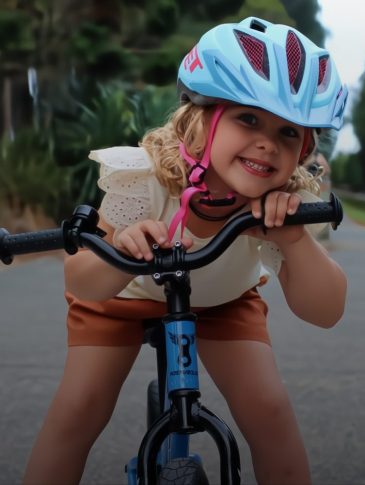
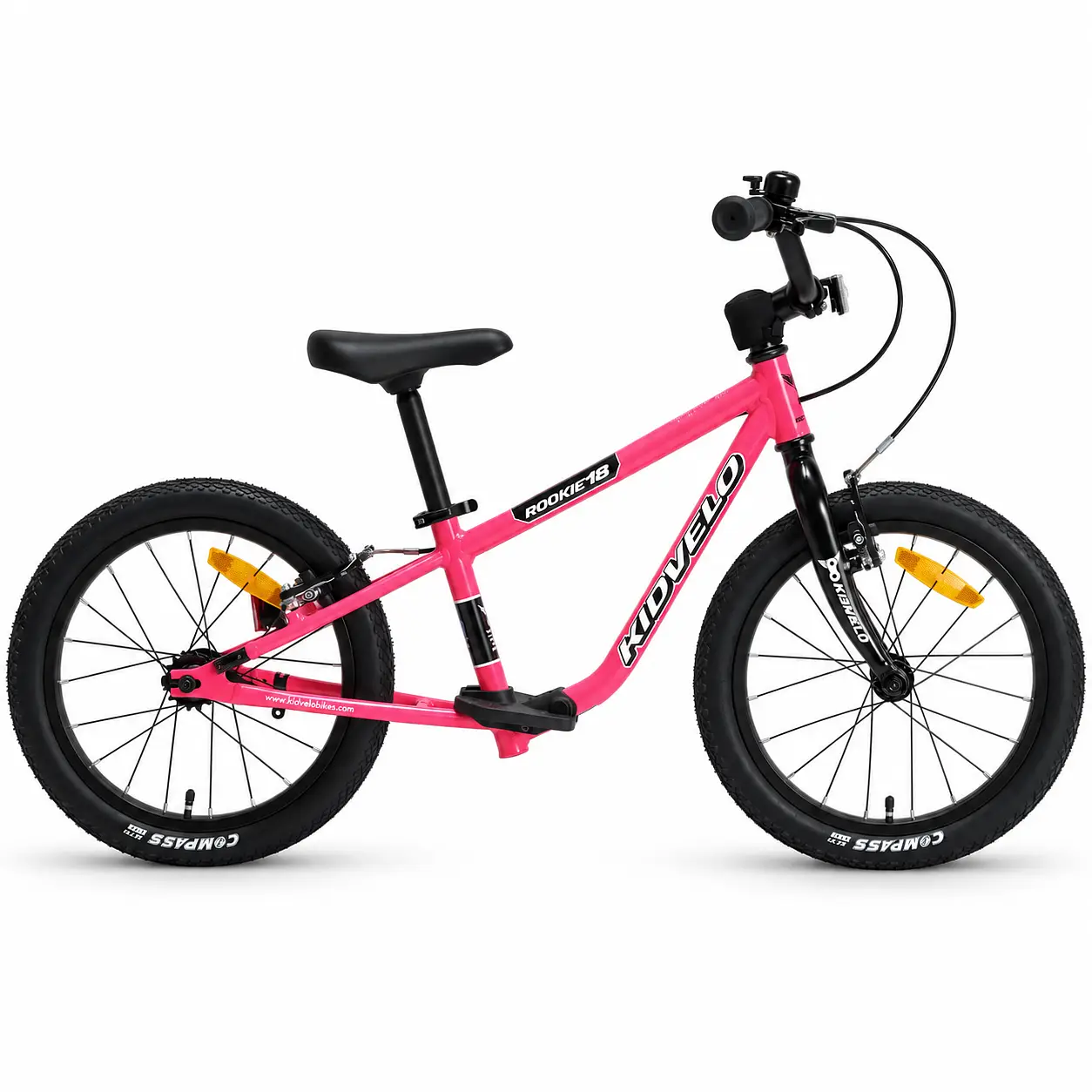
18 inch Balance Bike Ages (5-8yrs)
The Perfect Balance Bike for Older Kids Aged 5–8
Help your child build confidence and coordination with an 18 inch balance bike designed specifically for older children aged 5–8 years. Featuring lightweight frames, kid-specific geometry, and adjustable components, these bikes make learning to ride easier and more enjoyable. By mastering balance first, older kids can transition to a pedal bike naturally—without the need for training wheels.
✔ Fast Shipping Australia-wide • ✔ 30-Day Love Your Ride Guarantee • ✔ 5-Year Bike Warranty • ✔ Learn-to-Ride Specialists Since 2008
Loved by Hundreds of Happy Parents and Grandparents!
 Rated 5.00 out of 5 based on 12 customer ratings(12)$529.00This product has multiple variants. The options may be chosen on the product page
Frequently Asked Questions of 18 inch Balance Bikes
Many parents assume balance bikes are only for toddlers, but that's actually one of the biggest misconceptions about learning to ride a bike.
An 18-inch balance bike is designed specifically for older children who haven't yet learned to ride independently or who need extra confidence before moving to pedals.
Rather than struggling with pedals, gears and stabilisers all at once, children learn the most important cycling skill first—balance.
By removing the pedals, children can concentrate entirely on steering, balancing and controlling the bike. Once these skills become natural, learning to pedal is usually very quick.
An 18-inch balance bike is ideal for:
- Children aged 5 to 8 years learning to ride for the first time.
- Older children who lack confidence.
- Children with additional learning or coordination needs.
- Children who have struggled with stabilisers.
- Taller children who have outgrown smaller balance bikes.
Many children move onto a pedal bike within days or weeks after using an appropriately sized balance bike.
In almost every case, yes.
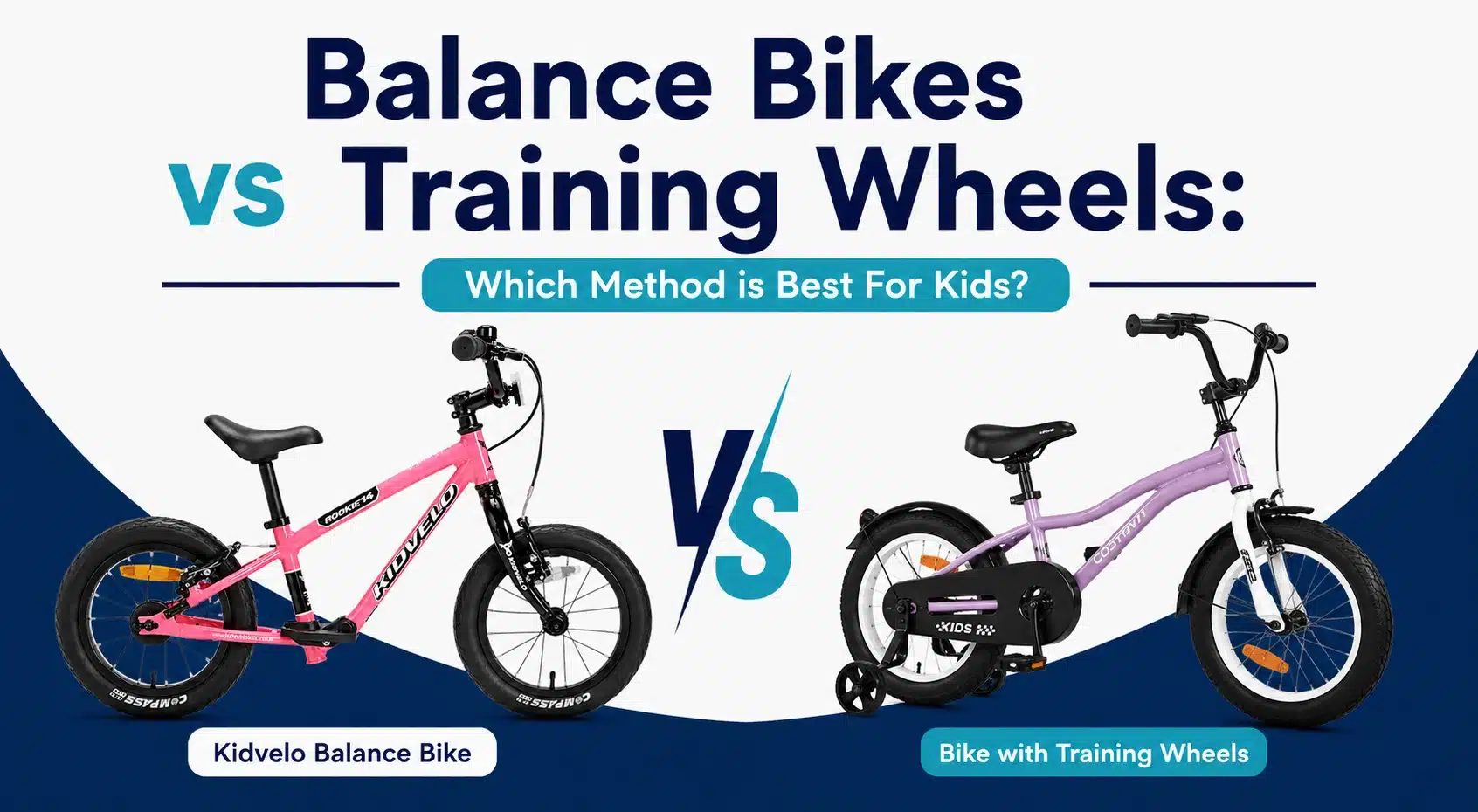
Stabilisers (training wheels) allow children to pedal but prevent them from learning the balance needed to ride independently. Once the stabilisers are removed, many children lose confidence because balancing is still a completely new skill.
Balance bikes teach children how to:
- Balance naturally.
- Steer correctly.
- Corner safely.
- Control their speed.
- Stop confidently.
Because balance becomes automatic, adding pedals later is much easier.
This is why many cycling instructors now recommend balance bikes instead of training wheels, even for older children.
The best way to choose the correct size is by measuring your child's inseam rather than relying only on age.
For an 18-inch balance bike, we generally recommend:
- Age: 5–8 years
- Height: approximately 110–135cm
- Inseam: approximately 45–60cm
Your child should be able to:
- Sit comfortably on the saddle.
- Place both feet flat on the ground.
- Push forward easily.
- Stop safely whenever they need to.
A correctly fitted bike builds confidence much faster than one that is too large.
Every child develops differently, but many children use an 18-inch balance bike for anywhere between several weeks and two years.
Some children only need a short period before moving onto a pedal bike, while others enjoy riding a balance bike for much longer because it is lightweight, fun and builds excellent bike-handling skills.
The adjustable seat and handlebars allow the bike to grow with your child, making it suitable throughout the 5 to 8-year age range.
Not all balance bikes are built the same.
A high-quality balance bike should include:
- Lightweight aluminium frame.
- Adjustable saddle.
- Adjustable handlebars.
- Comfortable ergonomic grips.
- Quality pneumatic air tyres.
- Child-sized brake levers.
- Rear hand brake.
- Durable bearings.
- Comfortable padded saddle.
- Strong wheels designed for everyday riding.
A lightweight bike is particularly important because children can control it more easily and gain confidence much faster.
There isn't one answer because every child learns at their own pace.
However, children who use a properly fitted balance bike often progress much faster than children learning with stabilisers.
Many parents are surprised to see their child:
- Walking within minutes.
- Gliding after a few rides.
- Balancing confidently within days.
- Riding a pedal bike shortly afterwards.
The key is allowing children to develop confidence naturally without pressure.
The Kidvelo Rookie 18-inch Balance Bike is designed to make learning enjoyable while helping children build the skills they'll use for life.
Looking For Adventure and Insider Tips?
Here you’ll find tons of ideas and inspiration to make bike riding or skating with your child, even more fun!
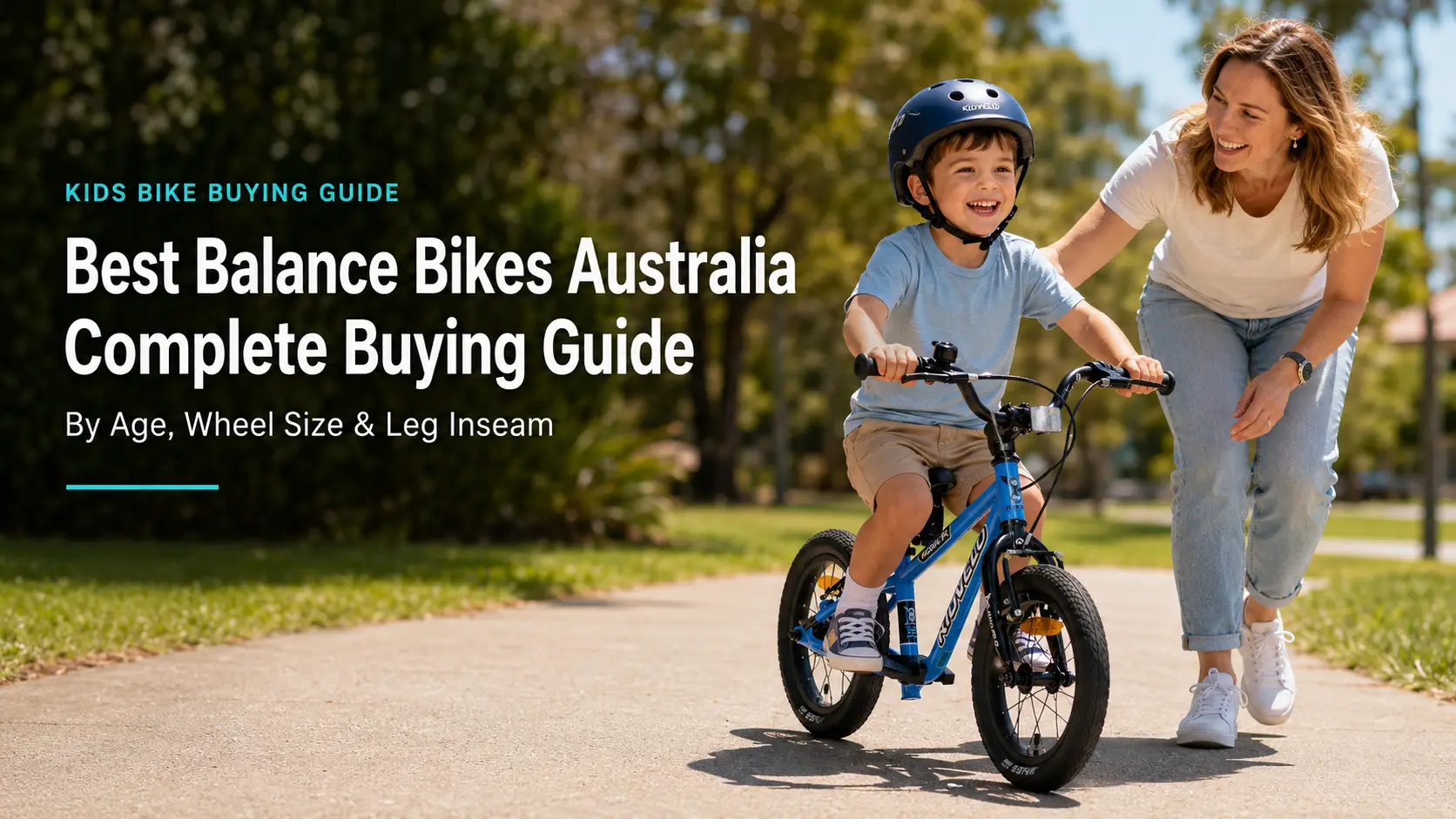
Why Choose Our Quality Products For Your Child?
The Complete Guide to the 18-Inch Balance Bike for Ages 5–8 Years
The High-Performance Choice for Older, Bigger, More Adventurous Riders
Why the 18-Inch Balance Bike Is the Most Underrated Cycling Product for Children
If you’re searching for the best 18-inch balance bike for a 5-year-old, the top balance bike for a 6 or 7-year-old beginner, the best bike for an 8-year-old who hasn’t learned to ride yet, or simply the best way to teach an older child to ride without stabilisers — you’ve come to exactly the right place.The 18-inch balance bike occupies a fascinating and important position in the world of children’s cycling. While much of the balance bike conversation focuses on toddlers and young children, the reality is that some of the most dramatic and impressive learning journeys we see at KidVelo involve children aged 5, 6, 7, and 8 — older riders who discover the joy of balance biking and progress to confident two-wheeled cycling with breathtaking speed.Whether your child is graduating from a smaller balance bike and ready to experience the thrill of a full-sized, high-performance machine, or they’re an older beginner taking their very first steps toward cycling independence — the Kidvelo 18-inch balance bike is designed to meet them exactly where they are and take them exactly where they want to go.This comprehensive guide covers everything parents, grandparents, and carers need to know — from choosing the right size and features to understanding the developmental science, practical learning tips, and the remarkable journey from balance bike to confident pedal cyclist.Understanding the 18-Inch Balance Bike — What Makes This Size Special
The Right Tool for Bigger Kids
Children aged 5–8 are a fundamentally different riding proposition compared to toddlers. They’re taller, heavier, faster, stronger, and significantly more capable — and they need a bike that reflects and respects that.An 18-inch balance bike is not simply a scaled-up version of a toddler bike. It’s a purpose-built riding machine designed for the specific physical dimensions, riding style, and developmental needs of older children. The larger wheel diameter, longer wheelbase, higher seat height range, and more robust construction all combine to create a riding experience that feels genuinely appropriate and exciting for this age group.This matters enormously for motivation and engagement. A 7-year-old on a correctly sized 18-inch balance bike feels capable, confident, and in control — not like they’re riding a baby’s toy. That psychological dimension is just as important as the physical fit.The Physics of Larger Wheels — Why Size Matters for Balance
One of the most interesting aspects of 18-inch balance bikes is the role that wheel size itself plays in the learning process. Larger wheels are inherently more stable due to basic physics — specifically the gyroscopic effect of larger, heavier rotating wheels and the greater rolling momentum they generate.In practical terms, this means:- The bike tracks more smoothly and predictably at speed
- Smaller bumps and surface imperfections are absorbed and rolled over rather than deflecting the wheel
- Children can achieve greater gliding speed with the same pushing effort
- The bike feels more planted and stable during cornering
The Developmental Case for Balance Bikes at Ages 5–8
Why It’s Never Too Late — The Neuroscience of Motor Learning
Some parents worry that if their child hasn’t learned to ride by age 5 or 6, they’ve somehow “missed the window.” This concern is completely understandable — but entirely unfounded.Motor skill learning, including cycling, remains highly accessible throughout childhood. In fact, from a neurological perspective, children aged 5–8 have several advantages over toddler learners:More developed cerebellum — The cerebellum, the brain region primarily responsible for balance and motor coordination, continues developing throughout childhood. By age 5–7, it’s significantly more capable than at age 2–3, meaning older children can process and integrate balance feedback more efficiently.Greater working memory capacity — Older children can consciously understand and act on feedback about their balance, steering, and body position in ways that toddlers simply cannot.Better proprioceptive awareness — The body’s ability to sense its own position in space (proprioception) is more refined in older children, making the subtle adjustments required for balancing on two wheels more accessible.Superior motivation and goal-setting — Older children can set goals, understand progress, and deliberately practice in ways that accelerate skill acquisition.The net result of all these advantages is that older beginners on balance bikes often progress faster than younger learners — moving from complete beginner to confident glider in days or weeks rather than the months sometimes required for toddlers.Physical Development Benefits for the 5–8 Age Group
Beyond learning to ride, the physical benefits of balance biking for children aged 5–8 are substantial and well-documented:Core Strength and Stability Balancing on two wheels engages and develops the deep core stabilising muscles in ways that most childhood activities don’t. Strong core muscles support good posture, protect against injury, and underpin athletic performance across a wide range of sports and activities.Vestibular System Development The vestibular system — responsible for balance, spatial orientation, and coordination — is stimulated and developed through the dynamic balance challenges of riding. This has positive effects that extend well beyond cycling, supporting better coordination and body awareness in all physical activities.Cardiovascular Fitness The pushing, scooting, and gliding of balance biking provides genuine aerobic exercise in a completely natural, child-led context. Children who ride regularly develop better cardiovascular fitness without it ever feeling like “exercise.”Bilateral Coordination Riding requires the simultaneous coordination of both sides of the body in different roles — one foot pushing, steering with both hands, weight shifting from side to side. This bilateral coordination has documented benefits for academic as well as physical development.Outdoor Activity and Screen-Free Time In an era of unprecedented screen time among children, a balance bike provides a compelling and intrinsically motivating reason to be outside, active, and engaged with the physical world. Children aged 5–8 who develop genuine enthusiasm for cycling at this stage are significantly more likely to maintain active habits throughout adolescence and adulthood.The Complete Buyer’s Guide — How to Choose the Best 18-Inch Balance Bike
With numerous options available at various price points, here’s a thorough and honest guide to making the best choice for your child.1. Frame Material and Weight — Getting the Balance Right for Older Riders
Children aged 5–8 are considerably stronger than toddlers and can handle a slightly heavier bike — but frame weight still matters significantly for riding enjoyment and manoeuvrability.Aluminium frames remain the gold standard — lightweight, rust-resistant, and strong. Look for frames in the 3.5–5kg range for this size. This is light enough for children to handle easily while being robust enough to withstand the more demanding riding style of older children.High-quality steel frames can be acceptable in this size category if the weight is controlled — look for anything under 5.5kg for a steel 18-inch balance bike. Anything heavier will feel noticeably sluggish and may reduce your child’s enthusiasm for riding.Avoid any balance bike — regardless of stated age range — that weighs over 6kg. At that weight, the bike is working against your child rather than with them.2. Pneumatic Tyre Specification — Critical at This Size and Speed
At 18 inches, with older, faster, and more adventurous riders, tyre quality is absolutely critical. This is not an area to compromise on.Older children ride faster, encounter more varied terrain, and place greater demands on tyre grip and performance. Quality pneumatic (air-filled) rubber tyres provide:- Superior grip on tarmac, gravel, grass, wet surfaces, and packed dirt trails
- Essential shock absorption on rougher terrain — protecting joints and making longer rides more comfortable
- Predictable handling during gliding, cornering, and braking
- The correct rolling resistance to build meaningful balance and gliding skills
3. Hand Brake System — A Genuine Safety Essential
At 18 inches and with the speeds that 5–8-year-olds can achieve, a quality hand brake is essential — not optional.Foot braking, which is perfectly adequate for toddlers on small balance bikes, becomes increasingly inadequate as children ride faster and tackle more demanding terrain. A quality hand brake provides:- Controlled, progressive deceleration at higher speeds
- Essential safety on downhill sections — even gentle slopes can generate significant speed on an 18-inch bike
- Direct skill transfer to pedal bike riding — children who learn effective hand braking on a balance bike arrive at pedal bikes with a critical safety skill already established
- Greater parental confidence in allowing children to ride on varied terrain
- Child-proportioned brake levers that smaller hands can reach and operate effectively
- Appropriate lever reach adjustment if available
- Smooth, progressive braking action rather than abrupt all-or-nothing stopping
- Quality cable and caliper components that maintain performance and won’t stretch or degrade rapidly
4. Seat Height and Adjustability — Essential for the 3-Year Usage Window
An 18-inch balance bike should ideally serve your child for 2–3 years — from first learning to ride through to transition to a pedal bike. To achieve this, generous seat height adjustability is essential.Look for:- Minimum seat height of 44–46cm — to accommodate younger or shorter riders at the lower end of the 5–8 age range
- Maximum seat height of 58–62cm — to accommodate taller children and ensure continued proper fit as they grow
- Quick-release or tool-free seat adjustment — essential for making frequent adjustments as children grow rapidly
- Secure, rattle-free seat clamp — ensures the seat stays firmly positioned during riding
5. Handlebar Height and Ergonomics
For older children who ride longer distances and at higher speeds, handlebar height and ergonomics have a direct impact on comfort, control, and riding posture.Incorrect handlebar height forces children into awkward body positions — either hunched over too-low bars or reaching uncomfortably for too-high ones. Both scenarios reduce control and cause fatigue.Look for:- Adjustable handlebar height — allows fine-tuning for correct, comfortable posture
- Appropriate bar width for the age group — wider than toddler bikes, but still proportional to a child’s shoulder width
- Quality, ergonomic grips that are comfortable for extended riding sessions
- Protective bar end plugs — an essential safety feature at any age
- Swept-back handlebar design — often more comfortable for younger riders than flat bars
6. Footrest — Encouraging Longer, More Adventurous Gliding
A footrest or gliding platform between the wheels is a particularly valuable feature for the 5–8 age group. At this stage, children are working on extended gliding — building the duration and distance of foot-off-ground time as they develop their balance and confidence.A footrest:- Provides a designated resting position for feet during extended glides
- Encourages longer foot-lift times by giving children a confident place to return their feet to
- Supports the development of the dynamic balance skills that translate directly to pedal bike riding
- Makes longer riding sessions more comfortable and enjoyable
18-Inch Balance Bike Compared to Other Options for This Age Group
One of the most common questions parents ask is whether to choose an 18-inch balance bike or go straight to a pedal bike. Here’s an honest comparison:18-Inch Balance Bike vs. Pedal Bike with Stabilisers
| Factor | 18-Inch Balance Bike | Pedal Bike with Stabilisers |
|---|---|---|
| Teaches balance | ✅ Yes — directly and effectively | ❌ No — stabilisers prevent it |
| Transition to two wheels | ✅ Fast and natural | ❌ Slow and often difficult |
| Confidence building | ✅ Progressive and empowering | ⚠️ Can create dependency |
| Safety for beginners | ✅ Feet always reach the ground | ⚠️ Feet may not reach on larger bikes |
| Long-term riding quality | ✅ Superior balance and control | ⚠️ Often poor habits established |
| Fun factor | ✅ Highly engaging from day one | ⚠️ Stabilisers can feel frustrating |
18-Inch Balance Bike vs. 16-Inch Pedal Bike (No Stabilisers)
For children who have already mastered balance on a smaller balance bike and are physically the right size, going directly to a 16-inch or 20-inch pedal bike without stabilisers is a perfectly valid option. In this case, the balance bike has already done its job brilliantly.However, for:- Children who haven’t previously used a balance bike
- Children who lack confidence on two wheels
- Children who are at the smaller end of the size range for pedal bikes
- Children with additional needs who benefit from additional time at the balance stage
Real-World Terrain — Where Will Your Child Ride?
The 18-inch balance bike is genuinely capable across a remarkable range of surfaces and environments. Here’s how it performs across the most common riding scenarios:Smooth Pavements and Paths 🏙️ The ideal surface for beginners — flat, predictable, and forgiving. Children can focus entirely on balance without navigating surface challenges.Grass and Parks 🌿 Slightly more resistance, which is actually beneficial for building pushing strength and balance. The larger 18-inch wheels handle grass surfaces significantly better than smaller bikes.Gravel Paths 🪨 Manageable with quality pneumatic tyres. Teaches children to read and navigate varied surfaces — a valuable skill for future cycling.Gentle Slopes and Hills ⛰️ This is where hand brakes prove their worth. Gentle downhill slopes are thrilling for children at this age and perfectly safe with a quality braking system. Uphill sections build strength and determination.Forest Tracks and Light Off-Road 🌲 The 18-inch size excels here — larger wheels roll over roots and uneven ground more smoothly than smaller sizes, and the longer wheelbase provides stability on looser surfaces.Practical Tips for Getting the Most From Your 18-Inch Balance Bike
For Beginners (Ages 5–8 Starting From Scratch)
Create the Right Environment Start on a flat, smooth, traffic-free surface. A quiet car park, empty playground, or smooth garden path is ideal. Remove any pressure and make it purely about fun exploration.Lower the Seat Initially When just starting out, lower the seat so your child can sit with feet completely flat and knees slightly bent. This maximises security and confidence. As they progress, gradually raise the seat to the correct height.Walk First, Glide Later Don’t rush toward gliding. Let your child walk the bike for the first few sessions — getting comfortable with the weight, width, and handling. Rushing this stage often backfires.Celebrate Every Milestone Every small step forward deserves acknowledgement — the first foot lift, the first short glide, the first corner navigated confidently. Positive reinforcement accelerates progress dramatically.Keep Sessions Short and Positive Twenty enthusiastic minutes beats an exhausted, frustrated hour every time. End sessions on a high note — always before your child loses enthusiasm.For Children Graduating From a Smaller Balance Bike
The transition is typically very smooth and exciting. Your child already has the fundamental balance skill — the 18-inch bike simply gives them a bigger, faster, more capable platform to express it. Most children are riding confidently within their very first session.Use the transition as an opportunity to:- Raise the bar on gliding distance and duration
- Tackle more challenging terrain
- Refine hand braking technique
- Build the extended, confident gliding that signals readiness for a pedal bike
Safety First — Essential Equipment for Every Ride
For children aged 5–8 on an 18-inch balance bike, we strongly recommend the following safety equipment on every single ride:⛑️ Helmet — Absolutely Non-Negotiable A properly fitted cycling helmet is essential for every rider of every age. For children, look for helmets certified to relevant safety standards with adjustable retention systems for a secure, comfortable fit. Replace any helmet that has been involved in an impact, regardless of visible damage.🦺 Knee Pads Particularly recommended for beginners. Falls from an 18-inch balance bike can be more impactful than from a smaller bike due to the greater height and speed involved. Quality knee pads protect the most commonly injured joint during cycling falls.🧤 Elbow Pads An excellent additional protection measure during the learning phase. The instinctive response to falling forward is to extend the arms — elbow pads protect this natural landing point.👟 Appropriate Footwear Always closed-toe, secure-fitting shoes. As foot braking remains an element of balance bike riding even for older children, foot protection is genuinely important.🌟 Appropriate Clothing Long trousers or leggings during the learning phase provide additional skin protection on minor falls. Bright or reflective clothing for visibility if riding near roads or in lower light conditions.The Perfect Gift — For Every Occasion
The Kidvelo Rookie 18-inch balance bike isn’t just a practical purchase — it’s one of those exceptional gifts that children remember and treasure.🎂 Birthday gift for a 5, 6, 7, or 8-year-old — guaranteed to be the best gift at the party 🎄 Christmas gift — the one they’ll be outside using every dry day from Boxing Day onwards 🐣 Easter gift — the perfect spring outdoor adventure starter 🏆 Achievement reward — for starting secondary school, sporting milestones, or academic achievements 👴👵 The grandparent gift that defines childhood memories — cycling adventures with grandparents are among the most cherished childhood experiencesUnlike many gifts that are exciting for a day and forgotten within a week, a quality balance bike delivers daily joy, meaningful skill development, and lasting confidence — making it genuinely exceptional value regardless of price point.Why Thousands of Families Choose Kidvelo
At Kidvelo Bikes, our entire focus is on giving children the finest possible start in their cycling journey — at every age, every stage, and every skill level.Our 18-inch balance bike has been developed with the specific needs of 5–8-year-old riders at its heart. Every specification decision — from the lightweight frame and quality pneumatic tyres to the essential hand brake and wide seat height range — reflects our deep understanding of what older children need from a balance bike to learn quickly, ride confidently, and have an absolute blast doing it.We’re proud to be the brand that families trust when they want to do this properly — to give their child the very best chance of becoming a confident, enthusiastic, lifelong cyclist.When you choose Kidvelo, you’re choosing:- 🚲 Expert design informed by child development science
- 🚲 Premium materials and components that perform and last
- 🚲 A perfect fit for children aged 5–8 at every stage of their journey
- 🚲 Outstanding after-purchase support from a team that genuinely cares
- 🚲 The trusted choice of thousands of happy families across the country