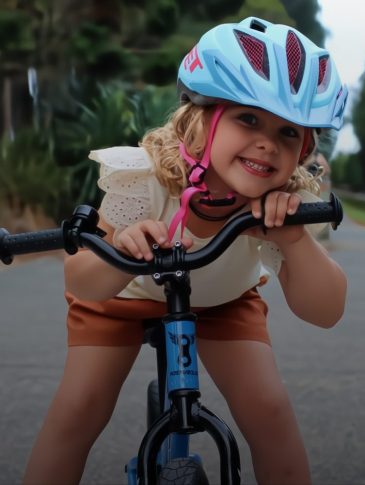
Toddler Balance Bikes
The Perfect First Bike for Toddlers
Help your little one build confidence, coordination, and independence with a toddler balance bike designed for early riders. Featuring lightweight frames, kid-specific geometry, and easy handling, our balance bikes make learning to ride fun and frustration-free. By mastering balance first, toddlers can develop essential riding skills naturally—without the need for training wheels.
✔ Fast Shipping Australia-wide • ✔ 30-Day Love Your Ride Guarantee • ✔ 5-Year Bike Warranty • ✔ Learn-to-Ride Specialists Since 2008
Loved by Hundreds of Happy Parents and Grandparents!
 Rated 5.00 out of 5 based on 12 customer ratings(12)$229.00This product has multiple variants. The options may be chosen on the product page
- Rated 5.00 out of 5 based on 12 customer ratings(12)$509.00This product has multiple variants. The options may be chosen on the product page
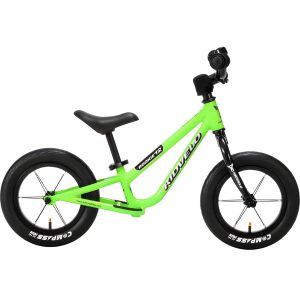
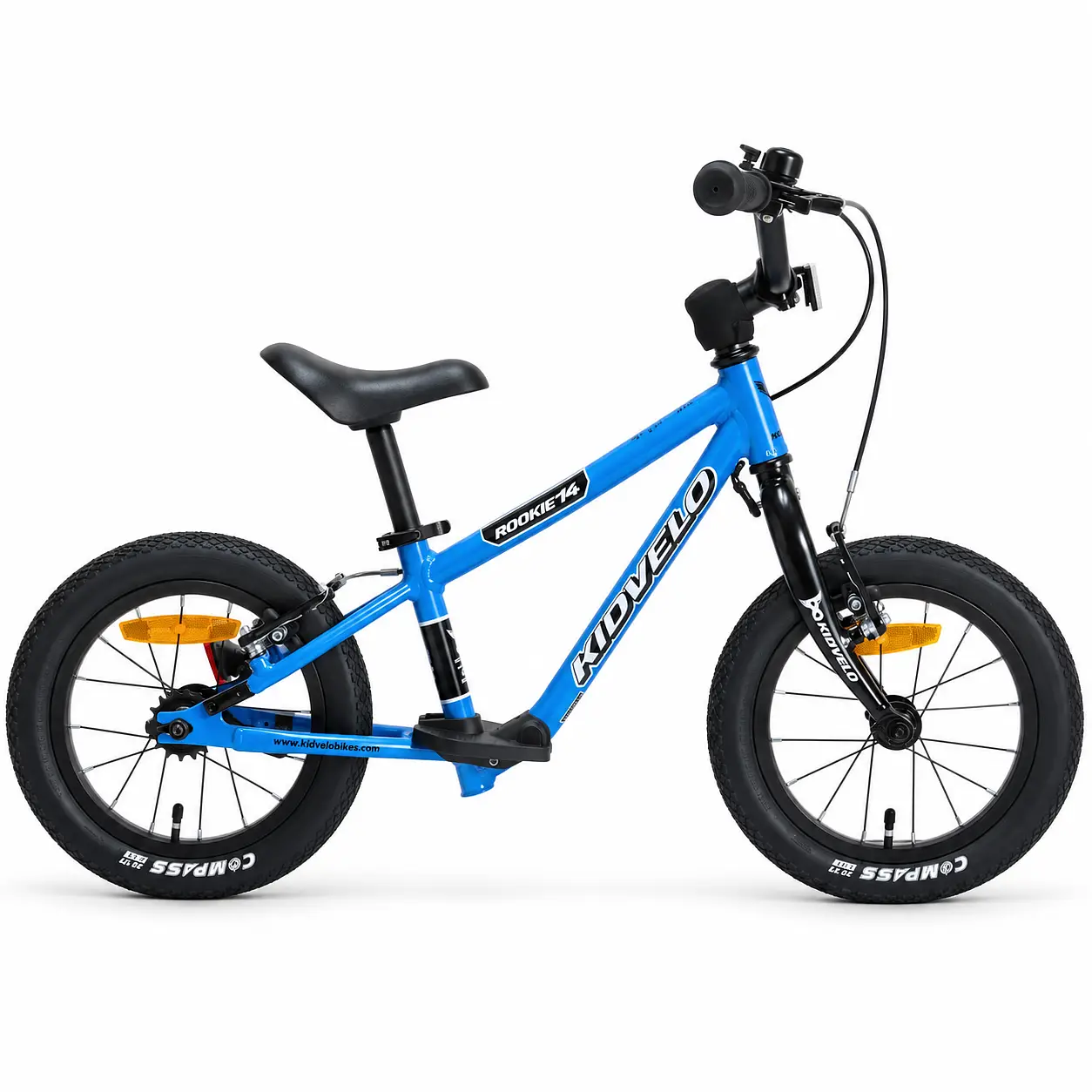
Frequently Asked Questions of Toddler Balance Bikes
Most toddler balance bikes are designed for children aged 18 months to 4 years. The most important measurement is your child's inseam rather than their age. Your child should be able to sit comfortably with both feet flat on the ground.
Balance bikes teach children the most important cycling skill first—balance. Because children learn to balance naturally, they usually transition to a pedal bike much faster and often without needing stabilisers.
Look for a lightweight frame, adjustable seat and handlebars, comfortable saddle, quality pneumatic tyres or durable puncture-proof tyres, child-friendly grips, and a bike that fits your child's height correctly.
Yes. When the bike is the correct size and used with a properly fitted helmet under adult supervision, balance bikes are one of the safest ways for young children to learn to ride because they can always place their feet on the ground.
Most children ride a balance bike for 1–3 years depending on when they start. Adjustable seats and handlebars allow the bike to grow with your child before they move onto their first pedal bike.
Measure your child's inseam and compare it with the bike's minimum seat height. A correctly fitted bike allows your child to place both feet flat on the ground while sitting comfortably on the saddle.
Looking For Adventure and Insider Tips?
Here you’ll find tons of ideas and inspiration to make bike riding or skating with your child, even more fun!
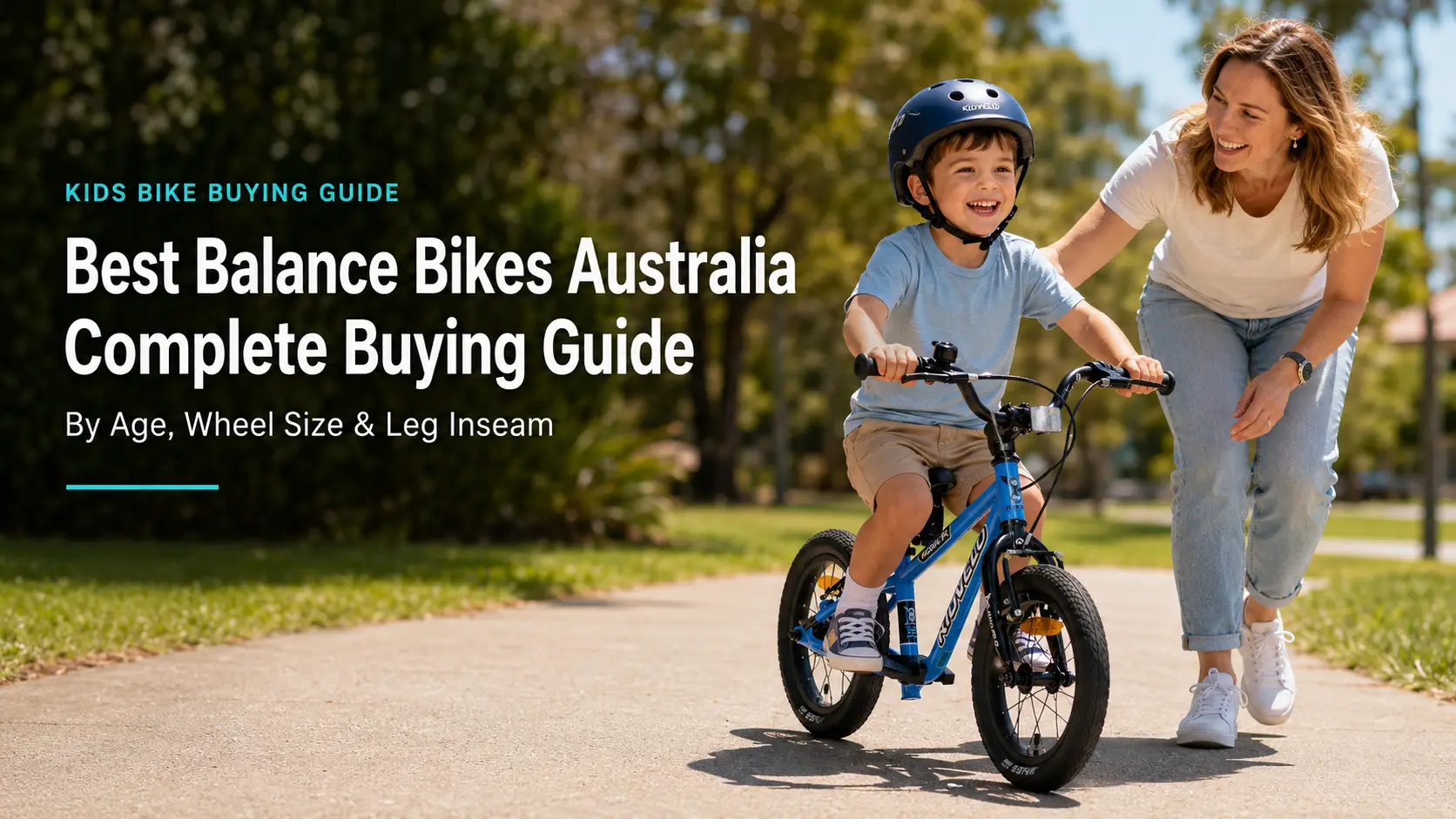
Why Choose Our Quality Products For Your Child?
The Complete Guide to Toddler Balance Bikes
Everything Parents, Grandparents, and Carers Need to Know — From First Ride to Pedal Bike
Why a Toddler Balance Bike Is the Best First Active Toy You’ll Ever Buy
If you’re searching for the best toddler balance bike, the best first bike for an 18-month-old, the top-rated balance bike for a 2-year-old, the perfect birthday gift for a toddler, or simply the best way to get your little one started on two wheels — welcome. You’ve come to exactly the right place.At Kidvelo, we believe that the toddler years represent a uniquely magical window for introducing children to the joy of two-wheeled riding. Between 18 months and 3 years, children are developing their balance, coordination, spatial awareness, and physical confidence at an extraordinary rate — and a well-designed toddler balance bike is the perfect tool to support, celebrate, and accelerate that natural development.More than just a toy, a quality toddler balance bike is a developmental investment — one that builds physical skills, emotional confidence, and a foundation for lifelong active habits that no other product in this category can match.This comprehensive guide covers everything you need to know — from understanding why balance bikes work and how to choose the right one, to practical tips for getting started, safety essentials, and the exciting journey ahead for your little rider.What Is a Toddler Balance Bike — and How Does It Work?
A toddler balance bike — sometimes called a running bike, push bike, first bike, strider bike, or no-pedal bike — is a two-wheeled bicycle with no pedals, no chain, and no training wheels. Instead of pedalling, toddlers use their feet to push themselves along the ground, gradually lifting their feet as their balance and confidence develop.This beautifully simple concept works in harmony with the way toddlers naturally learn physical skills — through repetition, exploration, play, and progressive challenge. There’s no instruction manual required, no formal teaching needed, and no frustration of being unable to reach the pedals or control an unfamiliar machine.A toddler simply sits on the bike, walks it forward, and — in their own time and at their own pace — begins to discover the magical feeling of gliding on two wheels.The Three Stages of Toddler Balance Bike Learning
Understanding the natural progression helps parents know what to expect and how to support their toddler through each phase:Stage 1 — Walking the Bike In the earliest phase, toddlers simply walk alongside or astride the bike — getting used to its weight, width, and how it moves beneath them. This familiarisation phase is essential and shouldn’t be rushed. It may last a few days or a few weeks depending on the individual child.Stage 2 — Scooting As familiarity grows, toddlers begin sitting on the saddle and using both feet to push themselves forward in a walking or running motion. They start to experience the feeling of the bike moving with them — and begin making their first instinctive balance corrections.Stage 3 — Gliding The breakthrough moment: feet lift off the ground and the toddler glides on two wheels, balanced entirely by their own developing sense of equilibrium. First glides may be brief — a second or two — but they lengthen rapidly as confidence builds. This phase, once reached, tends to accelerate quickly and dramatically.Most toddlers move through all three stages within 4 to 12 weeks of regular riding, though some move faster and others slower — all of which is completely normal.The Developmental Science — Why Balance Bikes Are So Powerful for Toddlers
The effectiveness of balance bikes for toddlers isn’t just anecdotal — it’s grounded in well-established child development science. Understanding the developmental mechanisms helps explain why this simple product has such a profound and lasting impact.Gross Motor Development — Building the Body’s Foundation
Between 18 months and 3 years, toddlers are in one of the most critical periods of gross motor development — the development of the large muscle groups and movements that underpin all physical activity. Walking, running, jumping, climbing, and balancing are all being refined and extended during this period.Balance biking directly engages and develops:Dynamic Balance — The ability to maintain equilibrium while in motion is one of the most fundamental and transferable physical skills a child can develop. Balance biking provides a uniquely rich environment for developing dynamic balance — more varied and progressive than almost any other toddler activity.Core Strength — Sitting upright on a moving balance bike without back support engages the deep core stabilising muscles continuously and progressively. Strong core muscles support healthy posture, protect the spine, and underpin athletic performance in every sport and physical activity your child will ever pursue.Bilateral Coordination — The alternating push of balance biking (left foot, right foot, left foot) develops the ability to use both sides of the body in coordinated, rhythmic patterns — a fundamental motor skill with benefits that extend to walking, running, swimming, and beyond.Proprioception — The body’s ability to sense its own position in space (proprioception) is critically developed through the constant micro-adjustments required to stay upright on a balance bike. Enhanced proprioception means better coordination, fewer trips and falls, and more confident physical exploration in all contexts.Leg Strength — The pushing action of balance biking builds genuine leg strength in the quadriceps, hamstrings, calves, and hip flexors — providing a physical foundation for all subsequent physical activity.Cognitive Development — More Than Just Riding
Perhaps surprisingly, toddler balance biking delivers significant cognitive development benefits alongside the obvious physical ones.Spatial Awareness — Navigating a balance bike through space — avoiding obstacles, steering around corners, judging distances and gaps — develops spatial reasoning and awareness in ways that are directly applicable to mathematics, reading, and problem-solving.Cause and Effect Reasoning — Toddlers on balance bikes are constantly experiencing and processing cause-and-effect relationships: push harder and go faster; lean left to turn left; brake feet to slow down. This is genuine early scientific reasoning in a completely natural, play-based context.Risk Assessment — Learning to judge which surfaces are rideable, how fast is too fast for a corner, and when to put feet down is an age-appropriate introduction to risk assessment — a cognitive skill with lifelong importance.Attention and Focus — Riding a balance bike requires and develops sustained attention in a way that passive activities cannot. Regular balance biking has been associated with improvements in children’s ability to focus and sustain attention in other contexts.Emotional and Social Development
Self-Efficacy and Confidence — There are few experiences more confidence-building for a toddler than mastering a new physical challenge. The progressive nature of balance biking — where improvement is visible, tangible, and self-directed — creates a powerful cycle of achievement and motivation that builds genuine self-confidence.Resilience — Toddlers learning to ride will fall occasionally. Getting back up, trying again, and succeeding builds the emotional resilience that is one of the most important predictors of lifelong wellbeing and success.Independence — The self-directed nature of balance biking — where the toddler sets the pace, chooses the direction, and controls the experience — fosters a healthy sense of independence and autonomy.Social Play — Riding alongside siblings, friends at the park, or parents creates rich opportunities for social interaction, turn-taking, shared excitement, and cooperative play.Love of Outdoor Activity — Perhaps most valuably, a positive early experience with outdoor physical activity plants seeds that grow into lifelong habits. Children who associate the outdoors with joy, adventure, and capability are significantly more likely to maintain active, healthy lifestyles throughout childhood and into adulthood.How to Choose the Perfect Toddler Balance Bike — The Complete Buyer’s Guide
The toddler balance bike market has expanded enormously in recent years — which is wonderful for choice but can make the decision feel overwhelming. Here is a thorough, honest guide to every feature that matters.The Single Most Important Factor — Weight
We cannot emphasise this enough: for toddler balance bikes, frame weight is the most critical specification.As a guideline, a child’s bike should weigh no more than 30% of the child’s body weight. For a typical 2-year-old weighing approximately 12kg, this means the bike should ideally weigh under 3.5kg. For an 18-month-old weighing closer to 10–11kg, under 3kg is the target.Many budget balance bikes — often attractively priced and beautifully photographed — are made from heavy steel and weigh 4, 5, or even 6kg. For a toddler, this is genuinely problematic:- A heavy bike is difficult to manoeuvre, reducing the toddler’s sense of control and confidence
- A heavy bike is harder to pick up when it falls — which it will, frequently
- A heavy bike tyres toddlers out faster, shortening enjoyable riding sessions
- A heavy bike is more likely to fall onto a toddler rather than away from them
- A heavy bike is more likely to discourage riding than inspire it
Seat Height — Getting the Fit Right
Correct seat height is the second most critical factor after weight. The seat must be low enough that your toddler can sit with both feet completely flat on the ground and their knees slightly bent — never tiptoed.How to confirm correct seat height:- Measure your toddler’s inseam (as described in FAQ 2)
- Check the bike’s minimum seat height
- Ensure the inseam is at least 2–3cm greater than the minimum seat height
- Check the maximum seat height — this determines how long the bike will fit as your toddler grows
- Easy, tool-free quick-release adjustment for frequent changes
- Secure clamping that won’t slip during riding
- Multiple distinct height positions rather than infinite stepless adjustment (which can slip)
Tyre Type — The Real-World Performance Difference
As covered in our FAQs, tyre type makes a substantial and immediately noticeable difference to the riding experience — particularly for toddlers on varied real-world surfaces.Pneumatic (Air-Filled) Rubber Tyres ✅- Natural grip on tarmac, grass, gravel, and wet surfaces
- Genuine shock absorption — every bump doesn’t jar through to your toddler’s body
- Appropriate rolling resistance that aids balance skill development
- The choice of every quality toddler balance bike
- Puncture-proof and zero maintenance — the only genuine advantage
- Poor grip, particularly on wet or loose surfaces
- Zero shock absorption — every surface imperfection is transmitted directly
- Can make balance learning harder due to unpredictable grip behaviour
Handlebars — Safety, Comfort, and Control
Toddler handlebars deserve more attention than they typically receive in product descriptions.What to look for:Handlebar end caps — Non-negotiable safety feature. Open handlebar ends are a genuine injury risk in falls. Every quality toddler balance bike should have secure, well-fitted bar end plugs.Grip material and texture — Soft, textured rubber grips that are easy for small hands to hold are far preferable to hard plastic. Grips should provide confidence-inspiring traction even with wet or slightly muddy hands.Handlebar width — Proportional to toddler shoulder width. Overly wide bars make steering effortful for small children; too-narrow bars reduce stability. Quality toddler balance bikes are designed with age-appropriate proportions throughout.Handlebar height adjustment — A valuable feature that extends the bike’s usable life and allows for correct riding posture as your toddler grows.Handlebar rotation limiter — Some quality toddler balance bikes include a mechanism that limits how far the handlebars can turn, preventing the wheel from folding back and causing the bike to tip suddenly. This is a particularly valuable safety feature for very young or early-stage riders.Footrest — The Feature That Accelerates Progress
A footrest or gliding platform between the wheels may seem like a minor detail — but for toddlers learning to glide, it’s genuinely impactful.Without a footrest, toddlers must simply lift their feet and hold them in the air during gliding — which is tiring and feels slightly precarious for younger riders. A footrest provides:- A safe, defined resting place for feet during gliding
- Greater confidence to lift feet for longer periods
- More comfortable extended gliding — feet aren’t dangling
- Faster development of the gliding habit that builds balance skill
Brakes — Do Toddler Balance Bikes Need Them?
For very young toddlers (18 months – 2.5 years), hand brakes are generally not necessary and may actually be counterproductive — they add complexity that little hands may not be ready for, and foot braking is perfectly natural and effective at the speeds toddlers ride.For toddlers at the older end of the range (2.5–3+ years), particularly those who are riding confidently and approaching readiness for a pedal bike, a simple rear hand brake can be a valuable introduction to brake mechanics.If you’re buying for a very young toddler, don’t prioritise brakes. If you’re buying for a more developed rider who is already scooting confidently, a rear brake is a worthwhile addition.Design, Colours, and Toddler Motivation
Never underestimate the role that visual appeal plays in toddler motivation. A toddler who loves the look of their bike is more motivated to ride it, more excited to show it off, and more engaged with the riding experience overall.Quality toddler balance bikes come in a wonderful range of colours, designs, and themes — from bold primary colours to subtle pastels, from animal themes to clean, modern aesthetics. Involving your toddler in choosing their bike colour or design (where possible) creates immediate ownership and excitement that translates directly into riding enthusiasm.Essential Safety Guide for Toddler Balance Bike Riders
Safety is non-negotiable when it comes to toddlers on balance bikes. Here is our comprehensive safety guide for parents and carers.Helmet Selection and Fitting — The Most Important Safety Decision
A correctly fitted helmet is the single most important piece of safety equipment for any child on any bike — including toddlers on balance bikes.Choosing the right toddler helmet:- Look for helmets specifically sized for toddler heads — typically 48–52cm head circumference for 18 months – 2 years
- Choose helmets certified to relevant safety standards (look for EN 1078 certification in the UK/Europe)
- Opt for helmets with adjustable retention systems — a dial or ratchet at the back that allows fine-tuning of fit
- Ensure good ventilation — toddlers overheat easily during active play
- The helmet should sit level on the head — not tilted back or forward
- Front edge should be two finger-widths above the eyebrows
- Side straps should form a V-shape just below the ears
- Chin strap should be snug — one finger should fit under the strap, two fingers should not
- The helmet should not rock forward, backward, or side to side when the head is moved
- After any impact, regardless of visible damage
- When your toddler outgrows it
- After 3–5 years of use (materials degrade over time)
Additional Protective Equipment
Knee pads — Strongly recommended for toddler balance bike riders, particularly in the early stages. Falls forward onto knees are the most common balance bike tumble, and even gentle falls can result in scrapes and bruises that distress toddlers and may put them off riding.Elbow pads — A valuable additional layer of protection, particularly for more cautious toddlers or parents who prefer comprehensive coverage.Wrist guards — Worth considering for toddlers who fall frequently or are learning on harder surfaces.Appropriate footwear — Always closed-toe, well-fitting shoes. Avoid sandals, flip-flops, or shoes that could slip off during riding. Shoes with some grip on the sole provide better traction during the pushing phase.Supervision Guidelines
- Always supervise toddlers actively during balance bike riding — never leave young riders unattended
- Keep toddlers away from roads, driveways with vehicle access, steep slopes, and water
- On slight downhill sections, position yourself in front of your toddler initially so they ride toward you rather than gathering uncontrolled speed
- Be aware of surface hazards — loose gravel, wet leaves, wet painted surfaces, and drain covers can all cause unexpected slides
- In parks and public spaces, watch for other pedestrians, dogs, and cyclists who may not expect a small toddler on a bike
The Best Environments for Toddler Balance Bike Riding
Choosing the right environment makes an enormous difference to both safety and enjoyment — particularly in the early stages.Ideal beginner environments:- 🏠 Smooth garden paths or patios — familiar, enclosed, and completely safe
- 🅿️ Quiet, empty car parks (weekend mornings) — large, flat, smooth surface with no traffic
- 🛝 Playgrounds with smooth tarmac areas — familiar environment with positive associations
- 🏫 School playgrounds on weekends — excellent surface, familiar location
- 🌿 Park pathways — gentle variation in surface and direction
- 🌱 Grass areas — slightly more resistance, great for building leg strength
- 🏘️ Residential streets with traffic-free sections — introduce gentle slopes and more varied surfaces
- Loose gravel or sand
- Steep slopes
- Wet, slippery surfaces (wet leaves, wet painted lines, wet tarmac)
- Busy areas with pedestrian or cyclist traffic
Toddler Balance Bike vs. Alternatives — Why Balance Bikes Win
vs. Tricycles
Tricycles are popular first wheeled toys but provide a fundamentally different — and developmentally inferior — experience for learning to ride:| Factor | Toddler Balance Bike | Tricycle |
|---|---|---|
| Teaches balance | ✅ Yes — directly | ❌ No — three wheels eliminate balance requirement |
| Transition to bike | ✅ Fast and natural | ❌ Difficult — balance must be learned from scratch |
| Manoeuvrability | ✅ Excellent | ❌ Limited — wide turning circle |
| Outdoor versatility | ✅ All surfaces | ⚠️ Best on flat, smooth surfaces only |
| Developmental benefit | ✅ Comprehensive | ⚠️ Limited to pedalling mechanics |
| Fun factor | ✅ Highly engaging | ⚠️ Can feel slow and restrictive |
vs. Ride-On Toys and Push Cars
Ride-on toys and push cars are wonderful for very young toddlers (under 18 months) as a precursor to balance biking — they build familiarity with the concept of wheeled movement and develop pushing strength.However, they don’t develop two-wheel balance, don’t teach steering in the same way, and provide no pathway to cycling. From 18 months onwards, a balance bike is the superior developmental choice.vs. Bikes with Training Wheels
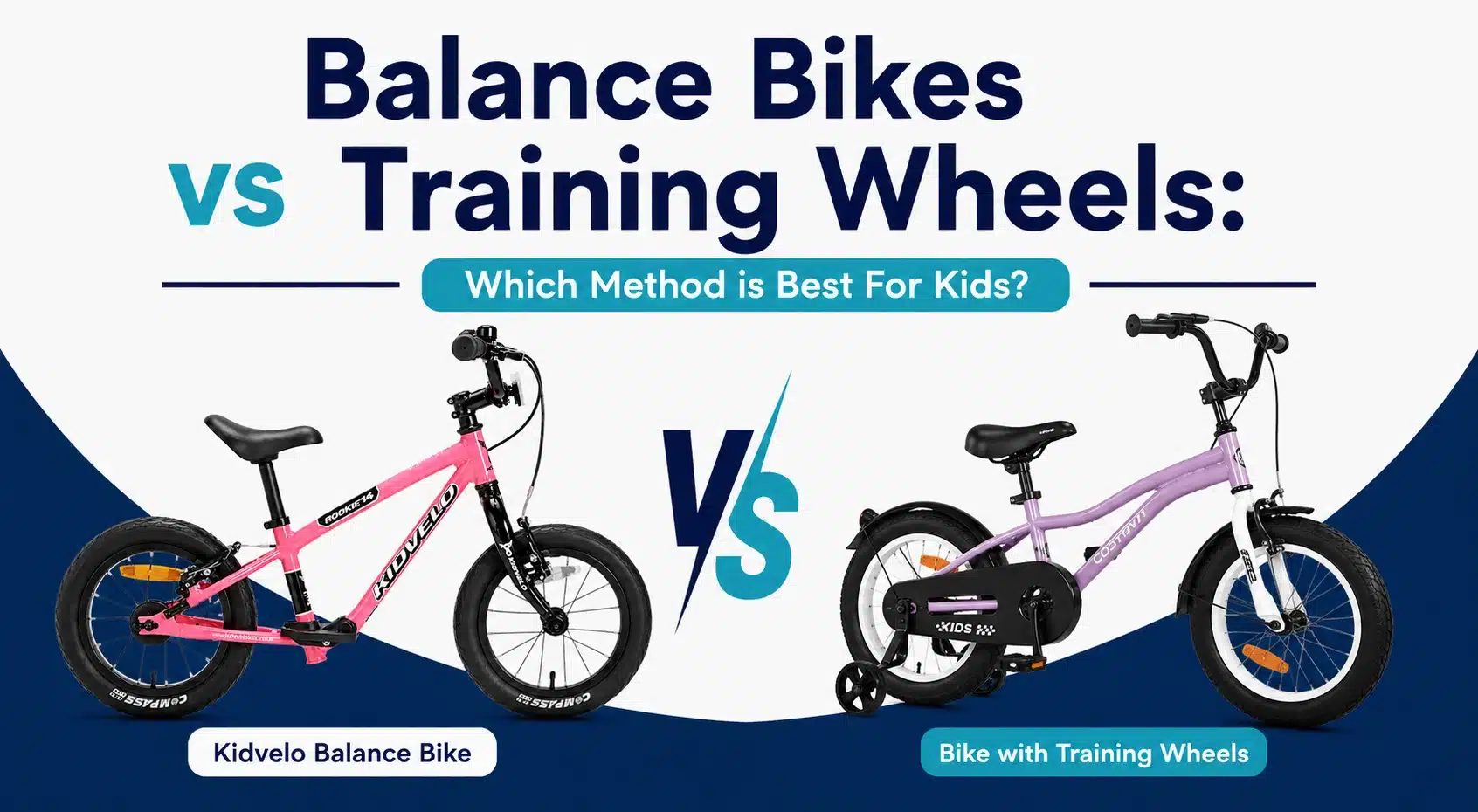
Training wheels prevent the development of balance — full stop. A toddler who learns on training wheels spends months developing muscle memory for a three-wheeled riding pattern that must be entirely unlearned when the wheels come off.A toddler on a balance bike is developing real, transferable balance skills from day one. The contrast in transition experience — balance bike graduate vs. training wheels graduate — is dramatic and immediate.Perfect Gift Ideas — The Toddler Balance Bike for Every Occasion
The Kidvelo toddler balance bike is consistently one of the most celebrated and appreciated gifts parents, grandparents, and family members can give a young child. Unlike many gifts that excite for a day and gather dust within a week, a quality toddler balance bike delivers:- Daily use throughout the toddler years
- Genuine, measurable developmental benefits
- Outdoor adventure and family memories
- A foundation skill that lasts a lifetime
Why Kidvelo Toddler Balance Bikes Are Trusted by Families Everywhere
At Kidvelo Bikes, designing the perfect toddler balance bike isn’t just what we do — it’s what we’re passionate about.We understand that the first riding experience shapes how a child feels about cycling for life. A great first experience creates a lifelong cyclist. A frustrating, uncomfortable, or frightening one can put a child off cycling for years. That’s why every decision we make — every gram of frame weight, every millimetre of seat height range, every detail of tyre specification and handlebar design — is made with your toddler’s experience at the absolute centre.Our toddler balance bikes offer:- 🚲 Featherlight frames that toddlers can genuinely control and handle
- 🚲 Quality pneumatic tyres for confident grip on every surface
- 🚲 Wide seat height adjustment that grows with your toddler
- 🚲 Ergonomic, safe handlebars with protective end caps
- 🚲 Beautiful, exciting designs that toddlers love and want to ride
- 🚲 Rigorous safety standards for complete parental peace of mind
- 🚲 Outstanding customer support from a team that genuinely cares about your child’s journey